Social and Community Care

Impact on Business (GRI3-3)
Challenges and Opportunities (GRI3-3)
The evolving energy landscape presents both challenges and opportunities for CKPower. These challenges include inequality in access to technology, economic fluctuations, environmental disruptions, and changing regulatory landscapes with a growing emphasis on climate change. Additionally, the rapid dissemination of information has heightened societal expectations, requiring CKPower to engage in proactive and transparent communication with stakeholders.
As a leader in renewable energy generation, CKPower recognizes the importance of establishing meaningful community engagement processes. The Company actively listens to community feedback, addresses misunderstandings, and implements timely and effective impact management measures.
In addition, CKPower sees significant opportunities to drive sustainable economic and social development through its energy expertise, continuously enhancing knowledge, and fostering collaborative networks across all sectors. The Company aims to improve the quality of life of communities, strengthen their capacity for self-reliance, and create shared value that supports the long-term sustainability of both communities and the business.
Commitment (GRI3-3)
CKPower is firmly committed to conducting its business with responsibility toward communities and society, while creating shared value for its key stakeholders by promoting inclusive growth, reducing inequalities, and ensuring no one is left behind.
The Company has established policies and strategies on social responsibility with a strong focus on sustainable community care and development, aligned with the United Nations Sustainable Development Goals (UN SDGs). It also emphasizes the creation of measurable impacts to ensure that community development efforts are effective and aligned with the Company’s business direction.
In addition, CKPower leverages its capabilities and expertise in the renewable energy business to support and promote community development. It encourages active collaboration among the Company, employees, and communities through constructive knowledge and experience sharing. Through this approach, CKPower aims to create shared value and continuously enhance community well-being.
CKPower firmly believes that this commitment will catalyze meaningful change for both communities and the business, leading to long-term sustainability together.
Operational Guideline (GRI3-3)
Policy
CKPower has developed a comprehensive community engagement and development policy and has established a Community Development and Participation Policy and Social and Environmental Guidelines, supported by social and environmental practices that guide its business activities toward sustainable development. These initiatives aim to enhance the well-being of communities, society, and vulnerable groups. The Sustainability Working Team oversees the implementation of these policies, setting long-term and short-term objectives, establishing key performance indicators, and developing actionable plans that align with CKPower’s sustainability strategy.
These initiatives are designed to achieve tangible results in support of the United Nations Sustainable Development Goals (UN SDGs). The Company regularly monitors, evaluates, and reviews performance to ensure continuous improvement and sustainable community relations. By integrating its business expertise into community and social care processes, CKPower effectively fosters sustainability across all dimensions, reinforcing its role as a responsible corporate citizen and a leader in renewable energy production.
Strategy and Roadmap
CKPower places great importance on social and community care throughout every step of its business operations, aiming to foster trust and demonstrate transparency across all areas of operation, from pre-construction site surveys to power plant construction and ongoing commercial operations. This commitment to transparency is demonstrated through comprehensive site surveys that seek to understand the traditional way of life and overall quality of life in communities surrounding the power plants. These surveys assess the economic, environmental, social, and human rights dimensions while also gathering community members’ opinions, concerns, needs, and levels of satisfaction.
CKPower actively collaborates with local residents to identify potential impacts and jointly plan Corporate Social Responsibility(CSR) activities or projects. These initiatives are tailored to address specific community needs, enhancing the quality of life for communities around power plants, providing access to renewable energy solutions that meet community needs, offering educational support to foster lifelong learning, supporting community career development to generate additional income, and developing public amenities and infrastructure to improve community well-being.
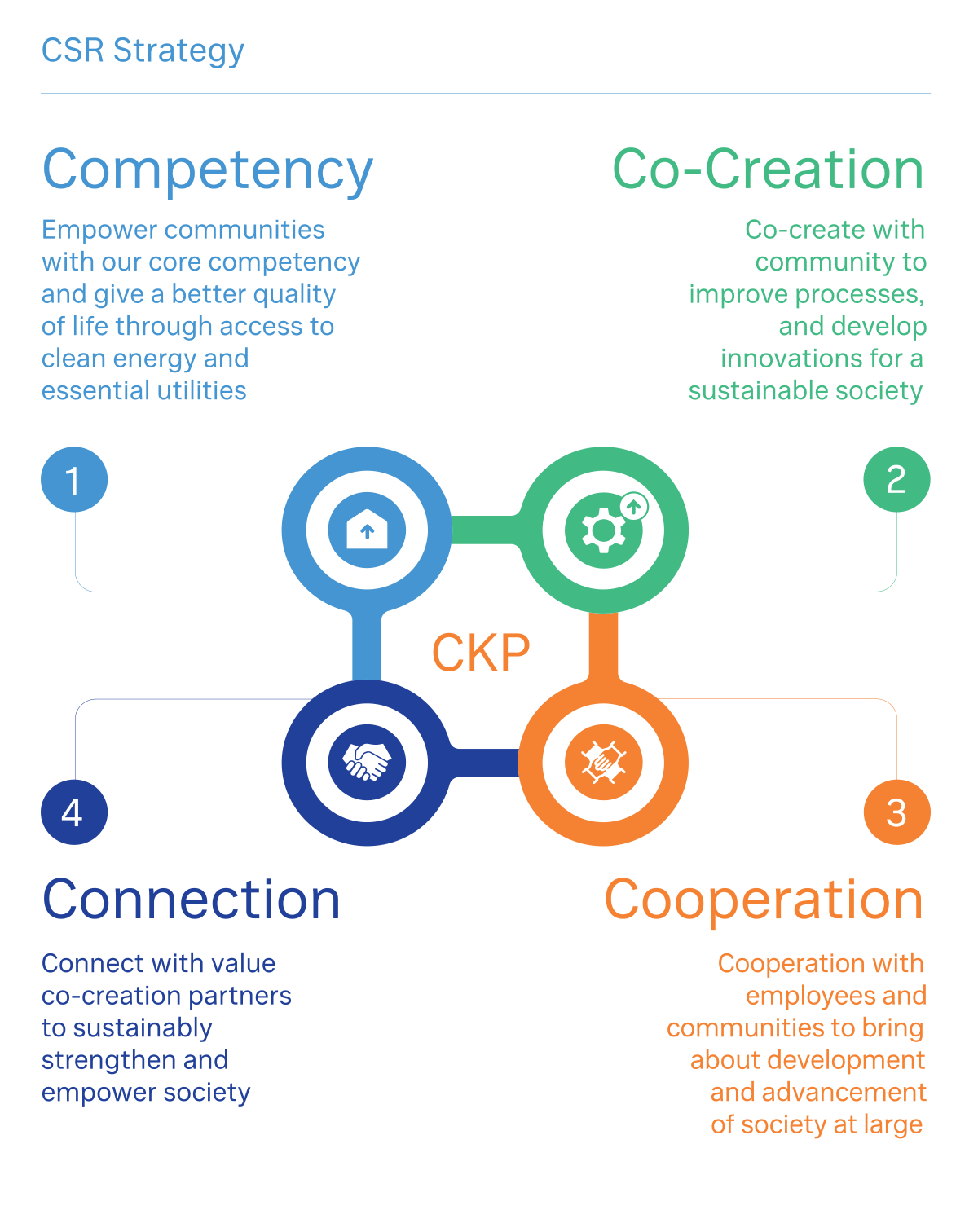
Through these initiatives, CKPower strives to address community expectations and concerns, seamlessly integrating them into its operations. This approach leverages CKPower’s clean energy engineering capabilities to create sustainable social value while strengthening community trust and engagement . To effectively implement its strategy and create long-term social value, CKPower employs the 3Cs Principle:
Competency
Enhancing clean energy engineering competencyCo-Creation
Delivering clean energy to co-create value for societyCooperation
Fostering cooperation with employees, communities, and network partnersUnder the 3Cs principle, CKPower carries out community engagement projects compatible with the local way of life through the “Competency – Co-Creation – Cooperation – Connection” strategies. In essence, CKPower uses its capabilities to empower communities, society, and stakeholders (Competency), advances ideas, innovations, and processes towards sustainability (Co-Creation), fosters employee and stakeholder participation (Cooperation), and collaborates with its network partners for sustainable development (Connection)
Resettlement and Relocation
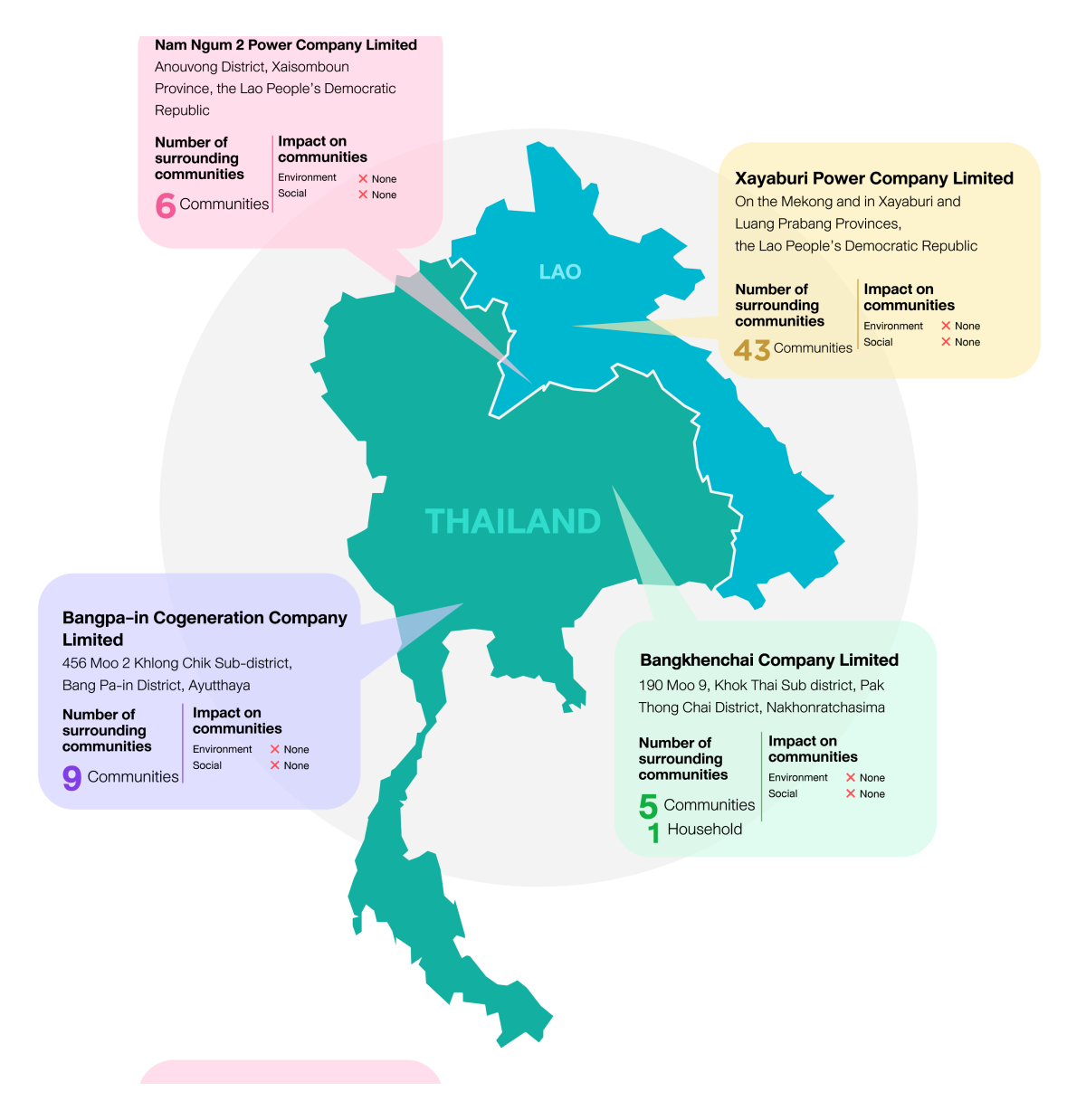
CKPower prioritizes its accountability to communities affected by operations of its power plants, such as the Xayaburi Power Plant in the Lao People’s Democratic Republic. The Company has undertaken support and assistance efforts for over 663 affected households originally located on either side of the Mekong riverbanks through resettlement, relocation, and quality of life improvement programs in accordance with the National Economic and Social Development Policy of Lao PDR. In addition, the Company has engaged in efforts to support and develop small communities scattered in remote areas by encouraging the formation of larger communities and facilitating exponential development in basic infrastructure and utilities, such as electricity, running water, and transport routes, in order to elevate quality of life in a sustainable way in accordance with the Urban and Economic Development Strategy of Lao PDR. These efforts are intended to complement the nation’s industrial development and promote sustainable economic growth, with the goal of increasing income and quality of life in 2023, as measured by a target annual household income of no less than 1,800 USD, or 15 million LAK.
Impact Assessment and Community Engagement (GRI413-1,413-2)
CKPower places high importance on community engagement to foster confidence and demonstrate its transparency in every community across 100% of its operational areas, from the pre-construction phase, through the construction period, and throughout the power generation phase.
The Company conducts site surveys to understand the traditional way of life and the quality of life in communities around the power plants across economic environmental, social, and human rights dimensions. It also carries out community surveys to gather feedback on concerns, needs, potential, satisfaction, and to jointly identify impact issues. The findings are systematically analyzed to develop appropriate mitigation measures, corrective actions, and remedial solutions
In addition, the Company utilizes the information obtained to develop CSR projects aligned with community needs and expectations, integrating them with its energy engineering expertise to create sustainable social value. According to the community survey results, even where no community is affected by the Company’s operations, CKPower continues to maintain its community and social engagement processes at least once a year. It also conducts community dialogue visits to monitor potential negative impacts from its operations, gather feedback on concerns, needs, and satisfaction levels, and jointly identify impact issues with the community. These practices are carried out in alignment with ISO 26000 and CSR-DIW standards.
Furthermore, the Company has established a grievance mechanism to receive complaints from communities, which are reviewed, recorded, and addressed in a timely manner in accordance with ISO 14001:2015 standards.
Overview of the Number of Surrounding Communities in 2025
Community Complaints Process (GRI2-25)
CKPower actively listens and responds to complaints from community members through a structured investigation process that complies with ISO 14001:2015 standards, ensuring that all complaints are reviewed and appropriately addressed. Additionally, the Company conducts regular site visits at least once a year and engages in open discussions with local communities to gather feedback, recommendations, and concerns, fostering transparent and constructive communication.
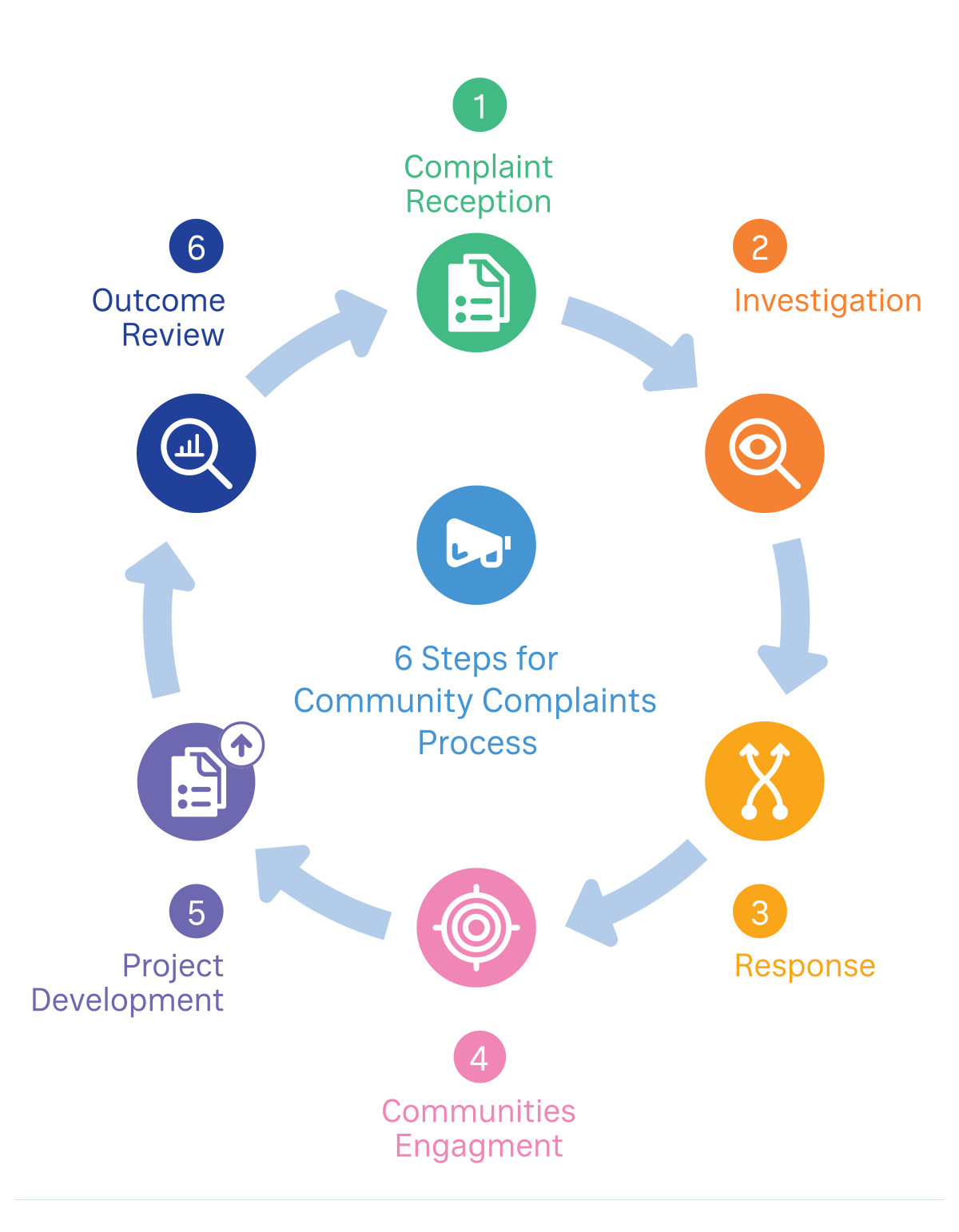
- Complaint Reception
- Community members submit complaints through established channels.
- CKPower logs complaints into the system in compliance with ISO 14001:2015.
- Investigation
- Evaluate complaints to determine impact levels.
- Collaborate with relevant departments for fact-finding.
- Response
- Keep the community informed of progress and remedial actions.
- Implement prompt solutions to address complaints.
- Communities Engagement
- Conduct at least one on-site visit and community engagement annually.
- Collect additional feedback, recommendations, and concerns.
- Project Development
- Utilize complaint data to develop community activities and projects.
- Design projects that meet community needs within CKPower’s operational framework.
- Outcome Review
- Follow up with communities regarding complaints and problem resolution.
- Report on performance and complaints annually
In 2025, community engagement confirmed that no complaints were raised regarding migration, violation of the rights of indigenous peoples and minorities, social and human rights issues, or environmental concerns. Furthermore, there were no unresolved complaints from previous engagements. The outcome demonstrates CKPower’s commitment to complying with applicable standards and fostering trust in communities surrounding its operating sites. (GRI411-1)
CSR Strategies
CKPower has formulated Corporate Social Responsibility (CSR) strategies that align with UN SDGs to create a positive impact and improve the quality of life of communities, society, and vulnerable groups effectively and sustainably.
The strategies emphasize the development of innovation that empowers communities in various fields while delivering long-term social value.
To guide its CSR initiatives, CKPower has outlined a strategic direction for social and community care over a five-year period from 2022 to 2026, focusing on sustainable project development that addresses community needs and contributes to social well-being.
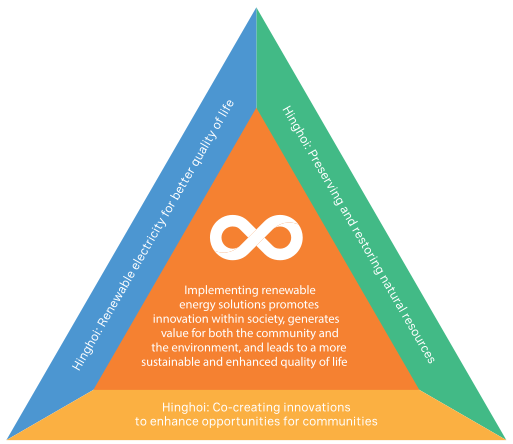
To ensure operational efficiency and effectively meet the needs of communities and society, CKPower follows three core principles of social and community care:
Core Principles of Social and Community Care

Quality of Life: Improving access to
renewable energy for a better quality of life.

Natural Resources and Environment:
Conserving, protecting, and restoring natural
resources and the environment sustainably

Job Security: Driving innovations and
creating opportunities for community career development.
| CKPower’s CSR Strategy Framework for Social Value Creation | ||
|---|---|---|
| Mission To generate the optimal, stable and fair return to stakeholders and to be responsible for environment, community and all stakeholders. |
||
| Hinghoi: Renewable electricity for better quality of life | ||

   Key FocusImproving access to renewable energy for a better quality of life. |
Initiatives
Clean electricity for communities

Clean water for communities

Clean Electricity Teacher for Change

Discovering the World of Renewable Energy
|
Outcome in 2026
Children and communities have access to 150,000 watts of renewable energy, in accordance with their specific needs.

Education and awareness raising programs on renewable energy are provided for 20,000 children and youth.
|
| Hinghoi: Preserving and restoring natural resources | ||

   Key FocusConserving, protecting, and restoring natural resources and the environment sustainably. |
Initiatives
Waste to
Value 
Grow Together
(โตไปด้วยกัน) 
Green
Power Plant |
Outcome in 2026
Natural resource and environmental protection education and awareness raising programs are provided for 10,000 employees , Children and youth and communities.

Conservation, protection and restoration of terrestrial forest and green areas are expanded by 80 rais.
|
| Hinghoi: Co-creating innovations to enhance opportunities for communities | ||

 Key FocusFurther enhancing innovations and creating opportunities for occupation development for communities |
Initiatives
OPOP (One Power
Plant One Product) 
Development of innovations to create job opportunities, improve products, and increase income for local communities.
|
Outcome in 2026
3 community products are developed.

An additional income of 1,300,000 baht is generated for communities.
|
Long-term targets, 2025 targets, and 2025 achievements (GRI2-27, 3-3)
| Social and Community Care | |||
|---|---|---|---|
Social and Community Care
|
|||
| Long-term Targets | |||
| unresolved complaints |
Zero
|
||
| 2025 Targets | 2025 Achievements | ||
| unresolved complaints |
Zero
|
Zero
|
|
| The satisfaction rate among communities regarding the CSR activities |
>95.0% |
97.67% |
|
| SDGs | |
||
| Social and Community Care | |||
|---|---|---|---|
Hinghoi:
|
|||
| Long-term Targets | |||
| Renewable energy for enhancing the quality of life in communities |
150,000
|
||
| Renewable energy knowledge |
20,000
|
||
| Renewable energy learning centers |
30
|
||
| 2025 Targets | 2025 Achievements | ||
| Renewable energy for enhancing the quality of life in communities |
120,000
|
163,100
|
|
| Renewable energy knowledge |
14,077
|
16,000
|
|
| Renewable energy learning centers |
51
|
34
|
|
| Social and Community Care | |||
|---|---|---|---|
Hinghoi: Preserving
|
|||
| Long-term Targets | |||
| Knowledge about the conservation of natural resources and the environment |
10,000
|
||
| Conservation and restoration of natural resources and the environment |
80
|
||
| 2025 Targets | 2025 Achievements | ||
| Knowledge about the conservation of natural resources and the environment |
7,625
|
9,940
|
|
| Conservation and restoration of natural resources and the environment |
77
|
16.16
|
|
| Social and Community Care | |||
|---|---|---|---|
Hinghoi: Co-creating innovations to
|
|||
| Long-term Targets | |||
| Development of community products |
3
|
||
| Increase income for communities |
1,300,000
|
||
| 2025 Targets | 2025 Achievements | ||
| Development of community products |
3
|
6
|
|
| Increase income for communities |
900,000
|
2,818,567
|
|
| Cumulative Performance (2022-2025) | ||||||||
|---|---|---|---|---|---|---|---|---|
| CKPower actively drives CSR projects that deliver measurable positive impacts and adhere to sustainable development practices, with a focus on enhancing access to renewable energy, conserving natural resources, and promoting economic development within communities. | ||||||||
| Project driver Hinghoi: Renewable electricity for better quality of life |
Project driver Hinghoi: Preserving and restoring natural resources |
Project driver Hinghoi: Co-creating innovations to enhance opportunities for communities |
||||||
|
|
|
|
||||||
|
Key Focus
|
Key Focus
|
Key Focus
|
||||||
|
Improving access to renewable energy for a better quality of life.
|
Conserving, protecting, and restoring natural resources and the environment sustainably.
|
Further enhancing innovation and creating livelihood development opportunities for communities.
|
||||||
|
Initiatives
|
Initiatives
|
Initiatives
|
||||||
|
Cumulative outcomes (2022-2025)
|
Cumulative outcomes (2022-2025)
|
Cumulative outcomes (2022-2025)
|
||||||
| Cumulative renewable energy for enhancing the quality of life in communities |
163,100
|
Cumulative conservation and restoration of natural resources and the environment |
16.16
|
Cumulative development of innovative community products |
6
|
|||
|
Cumulative reach in renewable energy knowledge Cumulative Renewable energy learning centers |
16,000
|
Cumulative knowledge about the conservation of natural resources and the environment |
9,940
|
Increase income for communities was generated from the following initiatives:
|
2,818,567
|
||
Quality of Life Enhancement in Communities and Society (GRI413-1, 203-1, 203-2)
Recognizing the importance of improving societal and community well-being as a cornerstone for economic advancement and sustainable growth, CKPower strives to foster employee engagement in CSR projects and activities aimed at creating positive impacts on both local communities surrounding its power plants and the broader society.
In 2025, CKPower implemented 21 community and social development projects, covering the following key areas:
- Renewable energy education to promote lifelong learning, particularly for children and youth
- Conservation, protection, and restoration of natural resources and the environment to strengthen ecological balance and mitigate climate change impacts
- Promotion of local traditions and culture to preserve community social identity
- Public health promotion to enhance the quality of life for local residents
- Development of community well-being, focusing on the elderly and disabled, to create an equitable and inclusive society
CKPower remains committed to developing projects that support the UN SDGs and create tangible results to ensure communities can achieve stable growth alongside the Company.
| 2025 Performance | ||
|---|---|---|
| CSR Projects/Activities | Number of projects | Million Baht |
| 1. Hinghoi: Renewable electricity for better quality of life | 17 | 4.13 |
| 2. Hinghoi: Preserving and restoring natural resources | 3 | 0.48 |
| 3. Hinghoi: Co-creating innovations to enhance opportunities for communities | 3 | 0.64 |
| 4. Support for improved quality of life in communities | ||
| • Promoting the quality of life of the community/elderly/disabled | 40 | 14.19 |
| • Education | 2 | 0.25 |
| • Public health | 5 | 2.29 |
| • Culture, traditions, and religion | 1 | 0.01 |
| • Public infrastructures | 2 | 0.02 |
| 5. Natural disaster relief | 1 | 0.07 |
| 6. Community relations and philanthropy | 5 | 2.18 |
| Total | 79 | 24.08 |
2025 Performance
cases
people, cumulatively
communities, cumulatively
watts, cumulatively
kgCO2e/ year, cumulatively
hours
people, cumulatively
networks, cumulatively
centers, cumulatively
structures, cumulatively
million baht
Hinghoi Project: The Key Driver of Sustainable Development
CKPower's commitment to social responsibility and sustainable growth is exemplified through the Hinghoi Project, a key driver of sustainability that integrates economic, social, and environmental dimensions.
This initiative leverages personnel expertise and community collaboration to address local needs sustainably, starting with community lifestyle surveys and co-creating innovative solutions with community members and network partners to ensure alignment with local priorities.
The Hinghoi Project, which forms the cornerstone of CKPower’s efforts to raise awareness, develop knowledge, and deploy innovative technology in communities, is implemented through three core pillars:
- Hinghoi: Renewable electricity for better quality of life
- Hinghoi: Preserving and restoring natural resources
- Hinghoi: Co-creating innovations to enhance opportunities for communities
In 2025, CKPower implemented various key projects under this approach through the Sustainability Working Teams at each power plant, aiming to create shared value for society.
| Number | Project | Province and Country | Project Location | Hinghoi: Renewable electricity for better quality of life | Hinghoi: Preserving and restoring natural resources | Hinghoi: Co-creating innovations to enhance opportunities for communities | |||
|---|---|---|---|---|---|---|---|---|---|
| Renewable energy added (Watt) | Individuals trained (persons) | Green area increased (rai) | Individuals trained (persons) | Products developed (products) | Income generated (baht) | ||||
| 1 | Construction of a solar powered school in Poo Kham Noi Village and Small water turbines for electricity generation in Mae Pa Klang Village (Cumulative) | Mae Hong Son Province, Thailand | Remote communities | 425.00 | |||||
| 2 | Ban Mae Loe Border Patrol Police Learning Center (Cumulative) | Mae Hong Son Province, Thailand | Remote communities | 681.00 | |||||
| 3 | Solar panel installation at Ban Mae Mu Nai Border Patrol Police Education Center under the sponsorship of CK Power Public Company Limited (Cumulative) | Chiang Mai Province, Thailand | Remote communities | 3,000.00 | 384.00 | 130.00 | |||
| 4 | Ban Kang School Learning Center | Luang Prabang Province, Lao PDR | Xayaburi Hydroelectric Power Plant | 658.00 | |||||
| 5 | Ban Du School (Saharat Wittaya) Learning Center (Cumulative) | Nakhon Ratchasima Province, Thailand | Pak Thong Chai Solar Power Plant 1 | 650.00 | 650.00 | ||||
| 6 | Wat Kudi Prasit School Learning Center (Cumulative) | Ayutthaya Province, Thailand | Bang Pa-In Cogeneration Power Plant | 481.00 | |||||
| 7 | Solar-powered underground water pumping system at Hin Hua Seua Kindergarten (Cumulative) | Xaisomboun Province, Lao PDR | Nam Ngum 2 Hydroelectric Power Plant | 2,400.00 | 540.00 | ||||
| 8 | Solar-powered lighting system at Lion Mahachak School 9 Border Patrol Police School and Ban Pa Khaolam Community (Cumulative) | Chiang Mai Province, Thailand | Remote communities | 900.00 | 308.00 | ||||
| 9 | Solar rooftop at Wat Na Haui | Prachuap Khiri Khan Province, Thailand | Remote communities | 16,630.00 | |||||
| 10 | Solar-powered lighting system at Na Bong Village | Vientiane, Lao PDR | Nam Ngum 2 Hydroelectric Power Plant | 9,900.00 | |||||
| 11 | Solar-powered water treatment turbines for clean canals in Khlong Jik Community | Ayutthaya Province, Thailand | Bang Pa-In Cogeneration Power Plant | 1,200.00 | |||||
| 12 | Environmental network in partnership with the Bangpa-in Industrial Estate 2023 - 2025 | Ayutthaya Province, Thailand | Bang Pa-In Cogeneration Power Plant | 190.00 | 250.00 | ||||
| 13 | Support for teachers in Teach for Thailand Project, Udomseelwitthaya School (Cumulative) | Ayutthaya Province, Thailand | Bang Pa-In Cogeneration Power Plant | 429.00 | |||||
| 14 | Support for teachers in Teach for Thailand Project, Pakthongchai Choonhawan Wittayakarn School (Cumulative) | Nakhon Ratchasima Province, Thailand | Pak Thong Chai Solar Power Plant 1 | 1,002.00 | |||||
| 15 | Solar-powered water treatment turbines for clean canals in Khlong Phutsa Community | Ayutthaya Province, Thailand | Bang Pa-In Cogeneration Power Plant | 1,200.00 | 750.00 | ||||
| 16 | Solar-powered lighting system at Ban Kang Village | Luang Prabang Province, Lao PDR | Xayaburi Hydroelectric Power Plant | 2,550.00 | |||||
| 17 | Solar-powered lighting system at Ban Phon Si Village | Luang Prabang Province, Lao PDR | Xayaburi Hydroelectric Power Plant | 2,550.00 | |||||
| 18 | ENVI Mission: Knowledge Sharing on Energy-Efficient Building Models | Saraburi Province, Thailand | Remote communities | 80.00 | 92.00 | ||||
| 19 | Solar-powered water treatment turbines for clean canals in Ban Khlong Sai Community (Cumulative) | Ayutthaya Province, Thailand | Bang Pa-In Cogeneration Power Plant | 1,400.00 | 500.00 | 250.00 | |||
| 20 | Solar-powered water pumping system for 25 rai of green spaces at Udomseel Witthaya School | Ayutthaya Province, Thailand | Bang Pa-In Cogeneration Power Plant | 6,300.00 | |||||
| 21 | Empowering Kids for a Sustainable World at Udomseel Witthaya School | Ayutthaya Province, Thailand | Bang Pa-In Cogeneration Power Plant | 111.00 | 111.00 | ||||
| 22 | Empowering Kids for a Sustainable World at Pak Thong Chai Chunhawan Wittayakhan School | Nakhon Ratchasima Province, Thailand | Pak Thong Chai Solar Power Plant 1 | 125.00 | 125.00 | ||||
| 23 | Hydroponic vegetable plot with a solar-powered irrigation system at Chao Fah Sang School | Ayutthaya Province, Thailand | Bang Pa-In Cogeneration Power Plant | 300.00 | 138.00 | 142.00 | 1.00 | 1,880.00 | |
| 24 | EIA Committee site visit at Vajiralongkorn Dam | Ayutthaya Province, Thailand | Bang Pa-In Cogeneration Power Plant | 50.00 | 1.50 | 60.00 | |||
| 25 | Energy cost-saving solar rooftop and solar-powered lighting system at Jaofasang School | Ayutthaya Province, Thailand | Bang Pa-In Cogeneration Power Plant | 9,700.00 | 140.00 | 70.00 | |||
| 26 | Energy cost-saving solar rooftop at Pak Thong Chai Chunhawan Wittayakhan School | Nakhon Ratchasima Province, Thailand | Pak Thong Chai Solar Power Plant 1 | 12,400.00 | |||||
| 27 | Solar-powered lighting system at Ban Huay Khua Luang Village | Luang Prabang Province, Lao PDR | Xayaburi Hydroelectric Power Plant | 1,500.00 | 192.00 | ||||
| 28 | Solar-powered street lighting system at Ban Pak Hung and Ban Pak Bo | Luang Prabang Province, Lao PDR | Xayaburi Hydroelectric Power Plant | 10,400.00 | 150.00 | ||||
| 29 | Discovering the World of Renewable Energy and Environment: A Study Visit to the Xayaburi Hydroelectric Power Plant (2023–2025; communities, schools near the power plant, and external participants) | Luang Prabang Province, Lao PDR | Xayaburi Hydroelectric Power Plant | 3,099.00 | 1,407.00 | ||||
| 30 | Discovering the World of Renewable Energy and Environment: A Study Visit to the Nam Ngum 2 Hydroelectric Power Plant (2023–2025; communities, schools near the power plant, and external participants) | Xaisomboun Province, Lao PDR | Nam Ngum 2 Hydroelectric Power Plant | 2,064.00 | 1,908.00 | ||||
| 31 | Solar-powered street lighting system at Ban Pho Pha | Xaisomboun Province, Lao PDR | Nam Ngum 2 Hydroelectric Power Plant | 18,000.00 | 160.00 | ||||
| 32 | Solar-powered lighting system at Ban Khok Fak, Ban Pak Pi, Ban Phon Sida, and Ban Na Khon Kaen | Luang Prabang Province, Lao PDR | Xayaburi Hydroelectric Power Plant | 26,400.00 | 180.00 | 180.00 | |||
| 33 | Solar-powered lighting system at Ban Muang Sum and Ban Hom Charoen | Xaisomboun Province, Lao PDR | Nam Ngum 2 Hydroelectric Power Plant | 24,000.00 | 54.00 | 96.00 | |||
| 34 | Solar-powered irrigation system for a school vegetable garden with produce distributed at Wat Ratsatthatham School | Ayutthaya Province, Thailand | Bang Pa-In Cogeneration Power Plant | 300.00 | 60.00 | 60.00 | 1.00 | ||
| 35 | Solar-powered water treatment turbines for clean canals in Ban Khlong Sai Community | Ayutthaya Province, Thailand | Bang Pa-In Cogeneration Power Plant | 1,600.00 | 80.00 | 80.00 | |||
| 36 | Gravity-fed water system and solar pump installation at Ban Hom Charoen | Xaisomboun Province, Lao PDR | Nam Ngum 2 Hydroelectric Power Plant | 3,600.00 | |||||
| 37 | Installation of a solar power system and school building renovation at Ban Pak Pa | Luang Prabang Province, Lao PDR | Xayaburi Hydroelectric Power Plant | 870.00 | 21.00 | 21.00 | |||
| 38 | Solar-powered lighting system and water system improvement at Ban Noen Sawang | Luang Prabang Province, Lao PDR | Xayaburi Hydroelectric Power Plant | 6,000.00 | 234.00 | 234.00 | |||
| 39 | Clean water supply for Ban Kang and Ban Phon Si | Luang Prabang Province, Lao PDR | Xayaburi Hydroelectric Power Plant | 100.00 | 100.00 | ||||
| 40 | Expansion of green areas within the power plant | Ayutthaya Province, Thailand | Bang Pa-In Cogeneration Power Plant | 1.50 | 57.00 | ||||
| 41 | Expansion of green areas at Nam Ngum 2 Hydroelectric Power Plant (2023–2025) | Xaisomboun Province, Lao PDR | Nam Ngum 2 Hydroelectric Power Plant | 11.66 | 360.00 | ||||
| 42 | Expansion of green areas outside the power plant at Khlong Ban Len Community | Ayutthaya Province, Thailand | Bang Pa-In Cogeneration Power Plant | 0.50 | |||||
| 43 | Expansion of green areas outside the power plant at Prasat Thong Municipality and Nong Pla Ra Community | Ayutthaya Province, Thailand | Bang Pa-In Cogeneration Power Plant | 300.00 | 1.00 | 300.00 | |||
| 44 | Soil quality improvement materials (Years 1–3) (2023–2025) | Luang Prabang Province, Lao PDR | Xayaburi Hydroelectric Power Plant | 452.00 | |||||
| 45 | Train-the-Trainer program for teachers of Border Patrol Police Schools | Nationwide | CKPower | 1,169.00 | 1,169.00 | ||||
| 46 | Hing Hoi Project: Construction of a library building and knowledge transfer for teachers and students | Chiang Mai Province, Thailand | CKPower | 65.00 | 65.00 | ||||
| 47 | Palang Sin Program: Empowering students nationwide through arts and creativity | Bangkok, Thailand | CKPower | 211.00 | 211.00 | ||||
| 48 | Pilot project on school waste management | Nakhon Ratchasima Province, Thailand | Pak Thong Chai Solar Power Plant 1 | 219.00 | 219.00 | ||||
| 49 | Firebreak management training along transmission lines (2024–2025) | Luang Prabang Province, Lao PDR | Xayaburi Hydroelectric Power Plant | 1,141.00 | |||||
| 50 | OPOP Program: Community woven textile products (2023–2025) | Luang Prabang Province, Lao PDR | CKPower | 3 | 2,402,850.00 | ||||
| 51 | OPOP Program: Fermented fish processing products | Luang Prabang Province, Lao PDR | Xayaburi Hydroelectric Power Plant | 1 | 30,297.00 | ||||
| 52 | Support for community vocational training | Luang Prabang Province, Lao PDR | CKPower | 383,540.00 | |||||
Target and Performance Comparison according to the Framework for Social Value Creation
better quality of life

Unit: watts (cumulative)

Unit: kCO2e/year

Unit: people (cumulative)

Unit: rai (cumulative)

Unit: kCO2e/year

Unit: people (cumulative)

Unit: products (cumulative)

Unit: baht (cumulative)
Projects Highlights in 2025 (GRI203-1, 203-2)
CK Power Public Company Limited
CKPower, as the core company of the Group, conducts its business with a strong commitment to creating shared value for society and enhancing the quality of life of communities, particularly in remote areas. The Company leverages its engineering expertise to expand access to renewable electricity and essential infrastructure that supports education. It also promotes knowledge sharing on renewable energy and the conservation and protection of natural resources and the environment. In addition, CKPower supports community products to promote local craftsmanship and generate income, ensuring that all initiatives align with community needs and the Company’s long-term framework for creating shared value.
In 2025, CKPower implemented three community and social development projects. These initiatives enabled 1,445 youths to access education that fosters an improved learning environment and provided them with knowledge on renewable electricity. In addition, 1,445 participants received knowledge on the conservation and protection of natural resources and the environment, with an emphasis on the sustainable use of natural resources. The Company also supported vocational skill development activities for communities in Luang Prabang, preserving local wisdom under the Hinghoi Studio Project, and promoted community products, generating a total income of THB 1,677,470. These outcomes reflect CKPower’s commitment to creating shared value among the Company, communities, and society by strengthening community capacity, laying a foundation of knowledge in energy and environmental stewardship, and promoting local livelihoods and income generation based on local wisdom. This approach contributes to balanced economic and social growth while supporting long-term sustainable development.
CSR Highlights in 2025
Hinghoi: Renewable electricity for better quality of life and Hinghoi: Preserving and restoring natural resources – Hinghoi Project Year 8
The Ban Mae Mu Border Patrol Police Learning Center under the patronage of CKPower Public Company Limited (“the Learning Center”) is located in Mae Chaem District, Chiang Mai Province. It is situated in a remote area and has been supported by the Company since 2016 through funding for the construction of the school building and teachers’ housing. With the increasing number of students and the former library being repurposed as a classroom for Grade 5 and Grade 6 students, CKPower constructed a new energy-efficient library building designed to maximize natural daylight and enhance ventilation, thereby reducing electricity consumption. The project received strong support from employee volunteers across CKPower. This support helped enhance the site’s functionality by improving and landscaping the surrounding areas to ensure suitability for use and to foster a more conducive learning environment.
Objectives:
- To construct a new energy-efficient library building designed in harmony with the local context, while enhancing a conducive learning environment for youth.
Implementation:
- Assessed the Learning Center and identified a shortage of classroom space for Grade 5 and 6 students, since the existing library had been converted into classrooms, leaving the school without a dedicated library as an essential learning resource for academic, vocational, and intellectual development.
- Constructed a new energy-efficient library building designed to increase natural daylight and reduce electricity consumption.
- Enhanced youth knowledge on renewable energy and the conservation, protection, and restoration of natural resources and the environment, with a focus on sustainable resource utilization through the core principles of Reduce, Reuse, Recycle, and proper waste segregation.

Competency
Applied CKPower’s engineering expertise to design and construct a new energy-efficient library by maximizing natural daylight and enhancing ventilation to reduce electricity consumption.

Co-creation
Cultivated knowledge and laid the foundation for sustainable community development through the planning and design of educational programs addressing energy challenges and the conservation, protection, and restoration of natural resources. These programs enabled youths to learn and practice electricity-saving behaviors, sustainable use of natural resources, and proper waste segregation within the school.

Connection
Collaborated with the Border Patrol Police Division 33 (BPP 33) to support access to education, from raising awareness to practical learning implementation, fostering an environment conducive to educational development.

Cooperation
Company engineers collaboratively designed the energy-efficient library and supervised construction to ensure compliance with engineering standards. In parallel, employees participated in planning and delivering knowledge-sharing activities on energy challenges, renewable energy, and sustainable natural resource use, while also improving the surrounding areas to optimize functionality.
| Project Targets and Performance | ||
|---|---|---|
| Description | Project Target | Outcomes |
| Construct a public learning asset for the Learning Center through the construction of a new library to expand access to academic knowledge, vocational skills, and general learning, thereby enhancing youths’ intellectual development. | 1 facility | 1 facility |
| Enhance knowledge and understanding of electricity challenges, renewable energy, and sustainable natural resource use among children, youths, and community members. | 65 people | 65 people |
| Encourage employee participation in project implementation. | 200 people | 463 people |
| Strengthen collaboration with network partners. | 2 organizations | 2 organizations |
Xayaburi Hydroelectric Power Plant
The Xayaburi Hydroelectric Power Plant, located in Xayaburi Province, Lao PDR, implements community development initiatives under a participatory approach through ongoing dialogue and stakeholder consultations with 43 affected communities across upstream, downstream, and surrounding areas of the power plant. Community needs and priorities identified through this engagement process are systematically integrated into the design and implementation of projects related to clean energy access, water supply systems, renewable energy education, environmental awareness, and livelihood development. These initiatives contribute to positive impacts on quality of life and foster long-term relationships with local communities.
In 2025, the Xayaburi Hydroelectric Power Plant implemented 11 community and social development projects aimed at enhancing quality of life and responding to the needs of surrounding communities. The initiatives focused on expanding access to clean energy, strengthening knowledge of renewable energy, promoting environmental awareness and natural resource conservation, and supporting livelihood development. As a result, a total of 33,270 watts of renewable electricity was delivered to communities. In addition, 1,270 beneficiaries participated in renewable energy learning programs, while 1,936 beneficiaries received environmental education. The projects also supported the development of two community products, generating total income of 30,297 THB. These outcomes reflect positive impacts on local communities and active participation in sustainable area development.
Projects Highlights in 2025
Hinghoi: Renewable electricity for better quality of life – Solar Streetlight Installation for Downstream Communities
Following the 2024 community needs assessment, the downstream communities of Ban Pak Pi, Ban Khok Fak, Ban Phon Sida, and Ban Na Khon Kaen were identified as facing insufficient street lighting at night, which increases accident risks and safety concerns among residents.
Objectives:
- To install solar-powered streetlights along community roads and walkways to address insufficient lighting, enhance safety, and improve the quality of life of local residents.
Implementation:
- Conducted a community assessment which identified insufficient street lighting in downstream communities, resulting in safety concerns due to poor nighttime visibility.
- Installed solar-powered streetlights at strategically selected locations, including 20 units in Ban Pak Pi, 26 units in Ban Khok Fak, 38 units in Ban Phon Sida, and 48 units in Ban Na Khon Kaen, ensuring suitability to the local context.
- Optimized resource utilization by using existing poles where possible and installing new poles only where necessary.
- Established community committees to oversee the operation and ensure the sustainable use of the street lighting system.
- Created a renewable energy fund to support long-term maintenance and repair of the solar streetlights.
Competency
Leveraged renewable energy engineering expertise to support society and local communities by designing solar panel installation systems for community roads and lighting infrastructure, and optimizing the use of existing poles for practical adaptation. The project was implemented in alignment with the needs and local context of Ban Pak Pi, Ban Khok Fak, Ban Phon Sida, and Ban Na Khon Kaen.
Co-creation
Extended renewable energy engineering capabilities by integrating solar panel systems with existing utility poles, maximizing the use of available infrastructure. This approach enhanced the efficiency of street lighting systems combined with solar power generation along community roads. The project was aligned with existing conditions, community needs, and local context identified through site assessments and collaborative engagement with community members.
Connection
Strengthened collaboration among Ban Pak Pi, Ban Khok Fak, Ban Phon Sida, and Ban Na Khon Kaen to create shared public assets through solar-powered streetlights along community roads, while fostering a village-level renewable energy network for sustainable use.
Cooperation
Employees, village leaders, and community members from Ban Pak Pi, Ban Khok Fak, Ban Phon Sida, and Ban Na Khon Kaen collaboratively participated in identifying issues, planning solutions, and determining appropriate installation points. This collaboration led to the installation of solar-powered streetlights at key locations along community roads. In addition, a renewable energy fund was established to support the long-term maintenance of solar street lighting equipment and maximize its service life.
| Project Targets and Performance | ||
|---|---|---|
| Description | Project Target | Outcomes |
| Expand community access to renewable electricity | 26,400 watts | 26,400 watts |
| Create shared public assets that support daily community use through the installation of solar streetlights along community roads and walkways | 132 installation points | 132 installation points |
| Establish renewable energy funds to support maintenance of lighting equipment and future community infrastructure development | 4 funds | 4 funds |
| Develop a renewable energy learning manual for communities | 1 set | 1 set |
| Provide renewable energy knowledge to community members | 120 people | 180 people |
| Encourage employee volunteer participation in solar streetlight installation and community learning activities | 20 people | 28 people |
Hinghoi: Preserving and restoring natural resources – Waste to Value (Year 3)
The Xayaburi Hydroelectric Power Plant has continued promoting waste management at source for the third consecutive year. Food waste generated from the plant’s canteen is processed into soil improvement materials for use in plant cultivation and green area maintenance, helping restore soil health, enhance soil fertility, and reduce reliance on chemical fertilizers.
Objectives:
- To reduce organic waste generated from the power plant and promote its beneficial reuse.
- To support soil restoration and encourage the use of organic materials in agriculture.
- To strengthen collaborative networks for environmental conservation between the Company and local communities.
Implementation:
- Conducted community needs assessments
- Produced soil improvement materials from food waste generated at the plant’s canteen.
- Distributed soil improvement materials to communities surrounding the power plant.
- Organized training sessions for community members on the proper use and maintenance of soil improvement materials.
- Promoted environmental awareness among employees, children, and youths.
Competency
Applied technical expertise in food waste analysis to assess production capacity and develop quality soil improvement materials, including the formulation of bio-inoculants.
Co-creation
Leveraged innovation and technical knowledge to develop bio-inoculants and soil improvement materials from food waste, while designing the product and establishing a structured plan to transfer both the materials and related knowledge to local communities.
Connection
Strengthened collaboration with Ban Noen Sawang, Ban Talan, and other interested communities surrounding the power plant to promote the proper use of soil improvement materials, enabling the production of high-quality agricultural outputs.
Cooperation
Employee volunteers participated in producing soil improvement materials and designing knowledge-sharing activities for communities surrounding the power plant, enabling them to cultivate high-quality and safe agricultural produce.
| Project Targets and Performance | ||
|---|---|---|
| Description | Project Target | Outcomes |
| Reduce carbon dioxide emissions by reducing waste incineration. | 2,000 kgCO2e per year | 3,840 kgCO2e per yea |
| Enhance knowledge and understanding among children, youths, and community members on soil improvement materials and environmental stewardship | 80 people | 125 people |
| Develop personnel capacity to deliver community knowledge and drive social innovation | 15 people | 27 people |
| Strengthen relationships with network partners and surrounding communities | 2 communities | 3 communities |
Hinghoi: Co-creating innovations to enhance opportunities for communities – Hygienic Fermented Fish (Pla Som)
The Xayaburi Hydroelectric Power Plant implemented the OPOP (One Power Plant One Product) initiative to promote the production of fermented fish (Pla Som) by Ban Na To Yai community. However, the community faced challenges related to hygiene standards, production processes, product processing, and appropriate packaging. These limitations resulted in a short product shelf life and restricted income-generating opportunities.
Objectives:
- To develop and upgrade a prototype fermented fish product to meet quality and hygiene standards.
- To transfer knowledge to the community in order to create stable and sustainable income.
Implementation:
- Conducted community needs assessments and studied appropriate fermented fish processing models.
- Improved the processing facility to comply with hygiene standards, while developing suitable packaging and designing a product logo.
- Organized training sessions to transfer knowledge on hygienic fermented fish processing, with the aim of scaling up to other communities.
- Promoted the extension of product shelf life and enhanced the capacity for sustainable income generation.
Competency
Employees and relevant departments provided technical support on fermented fish processing, hygiene standards, and shelf-life extension.
Co-creation
Enhanced product innovation by building upon local wisdom and developing improved packaging and new labeling that reflects the community’s identity, making the product more modern and market-ready.
Connection
Strengthened collaboration with Ban Na To Yai community to develop standardized, safe, and marketable fermented fish products with extended shelf life, creating sustainable income and expanding processing knowledge to other communities.
Cooperation
Employee volunteers collaborated with the Ban Na To Yai community to transfer knowledge, conduct practical processing trials, and support both online marketing and on-site sales within the power plant.
| Project Targets and Performance | ||
|---|---|---|
| Description | Project Target | Outcomes |
| Develop fermented fish products from Ban Na To Yai community to meet production and safety standards | 1 product (1 Pla Som type) |
1 product (5 Pla Som type) |
| Enhance income and improve quality of life for community households | 600,000 LAK/month 900 baht/month |
895,000 LAK/month 1,300 baht/month |
| Transfer knowledge on processing, packaging, labeling, and marketing to the community | 40 people | 75 people |
Nam Ngum 2 Hydroelectric Power Plant
The Nam Ngum 2 Hydroelectric Power Plant, located in Xaisomboun Province, Lao PDR, implements community development initiatives under a participatory approach through ongoing dialogue and stakeholder consultations with 6 communities within an approximately 20-kilometer radius of the power plant. Community needs and priorities identified through this engagement process are systematically integrated into the design and implementation of projects related to clean energy access, water supply systems, renewable energy education, environmental awareness, and livelihood development. These initiatives contribute to positive impacts on quality of life and foster long-term relationships with local communities.
In 2025, a total of 5 community and social development projects were implemented to enhance quality of life and respond to the needs of surrounding communities. The initiatives focused on expanding access to clean energy, strengthening renewable energy knowledge, promoting environmental awareness, and supporting livelihood development. As a result, a total of 27,600 watts of renewable electricity was delivered to communities. In addition, 876 beneficiaries participated in renewable energy learning programs, while 744 beneficiaries received environmental education. The projects also contributed to the expansion of 5.1 rai of green areas. These outcomes reflect positive impacts on local communities and active participation in sustainable area development.
Projects Highlights in 2025
Hinghoi: Renewable electricity for better quality of life – Solar Streetlight Installation at Ban Muang Sum and Ban Hom Charoen
Following the 2024 community needs assessment, Ban Muang Sum and Ban Hom Charoen, communities surrounding the Nam Ngum 2 Hydroelectric Power Plant, were identified as experiencing insufficient lighting along their main roads at night. Limited visibility increased accident risks and raised safety concerns among residents.
Objectives:
- To install solar-powered streetlights along main roads to address insufficient lighting, enhance safety, and improve the quality of life of community members.
Implementation:
- Conducted a community assessment, which identified safety concerns along the main roads passing through Ban Muang Sum and Ban Hom Charoen due to inadequate nighttime lighting.
- Installed 30 solar-powered streetlights in Ban Muang Sum and 30 units in Ban Hom Charoen, with installation points strategically selected to suit the local context.
- Optimized resource utilization by using existing poles where possible and installing new poles only where necessary.
- Established community committees to oversee the operation and ensure the sustainable use of the street lighting system.
- Created a renewable energy fund to support long-term maintenance and repair of the solar streetlights.
Competency
Leveraged renewable energy engineering expertise to support society and local communities by designing solar panel installation systems for community roads and lighting infrastructure, and optimizing the use of existing poles for practical adaptation. The project was implemented in alignment with the needs and local context of Ban Muang Sum and Ban Hom Charoen.
Co-creation
Extended renewable energy engineering capabilities by integrating solar panel systems with existing utility poles, maximizing the use of available infrastructure. This approach enhanced the efficiency of street lighting systems combined with solar power generation along community roads. The project was aligned with existing conditions, community needs, and local context identified through site assessments and collaborative engagement with community members.
Connection
Strengthened collaboration between Ban Muang Sum and Ban Hom Charoen, together with relevant stakeholders, to create shared public assets through solar-powered street lighting, while fostering a local renewable energy network and promoting renewable energy model villages.
Cooperation
Employees and community members from Ban Muang Sum and Ban Hom Charoen collaboratively participated in identifying issues, planning solutions, and determining appropriate installation points. This collaboration led to the installation of solar-powered streetlights at key locations along community roads. In addition, a renewable energy fund was established to support the long-term maintenance of solar street lighting equipment and maximize its service life.
| Project Targets and Performance | ||
|---|---|---|
| Description | Project Target | Outcomes |
| Expand community access to renewable electricity | 24,000 watts | 24,000 watts |
| Create shared public assets for daily community use in Ban Muang Sum and Ban Hom Charoen through the installation of solar streetlights. | 60 installation points | 60 installation points |
| Establish renewable energy funds to support maintenance of lighting equipment and future community infrastructure development | 2 funds | 2 funds |
| Develop a renewable energy learning manual for communities | 1 set | 1 set |
| Provide renewable energy knowledge to community members | 40 people | 44 people |
| Encourage employee volunteer participation in solar streetlight installation and community learning activities | 30 people | 30 people |
Hinghoi: Preserving and restoring natural resources – Expanding Green Areas within the Power Plant
The power plant annually participates in the National Tree Planting Day of Lao PDR by conducting tree planting activities to expand green areas within the power plant, support carbon sequestration, and foster environmental awareness and stewardship among employees.
Objectives:
- To increase green areas within the power plant.
- To enhance employees’ knowledge and awareness in protecting and conserving natural resources and the environment.
Implementation:
- Conducted site assessments and organized knowledge-sharing activities to strengthen employees’ understanding of environmental conservation.
- Planted 230 trees across 5.1 rai within the power plant area.
- Promoted environmental awareness and a culture of stewardship among employees.
- Monitored tree survival rates and calculated estimated carbon sequestration per rai per year.
Competency
Leveraged environmental expertise and experience to identify appropriate planting areas and select suitable tree species, supporting the expansion of green areas within the power plant and strengthening natural resource protection.
Co-creation
Applied species data and proper planting methodologies in accordance with guidelines from the Thailand Greenhouse Gas Management Organization (TGO) to ensure standardized carbon sequestration calculations.
Connection
Strengthened collaboration with EGAT and EDL to expand green areas within the power plant.
Cooperation
Executives, employees, and representatives from NN2, EGAT, and EDL participated in expanding green areas within the power plant, while enhancing knowledge and awareness of environmental conservation through tree planting activities aligned with TGO guidelines.
| Project Targets and Performance | ||
|---|---|---|
| Description | Project Target | Outcomes |
| Expand green areas within the power plant through tree planting | 3 rai | 5.1 rai |
| Enhance knowledge on tree planting and environmental protection among NN2, EGAT, and EDL employees | 120 people | 120 people |
| Increase carbon sequestration through tree planting and support greenhouse gas mitigation | 30 trees, increasing carbon sequestration by 2,185 kgCO2e per year. | 30 trees, increasing carbon sequestration by 2,185 kgCO2e per year. |
| Strengthen collaboration with partner organizations | 2 partners (EGAT and EDL) | 2 partners (EGAT and EDL) |
Bangpa-In Cogeneration Power Plant
The Bangpa-In Cogeneration Power Plant, located within the Bangpa-In Industrial Estate, implements community development initiatives under a participatory approach through ongoing dialogue and stakeholder consultations with 53 communities within a 1–5 kilometer radius of the power plant. Community needs and priorities identified through this engagement process are systematically integrated into the design and implementation of projects related to clean energy access, water supply for consumption and domestic use, renewable energy education, environmental awareness, and livelihood development. These initiatives contribute to positive impacts on quality of life and foster long-term relationships with local communities.
In 2025, the Bangpa-In Cogeneration Power Plant implemented 2 community and social development projects aimed at enhancing quality of life and responding to the needs of surrounding communities. The initiatives focused on expanding access to clean energy, strengthening knowledge of renewable energy, promoting environmental awareness and natural resource conservation, and supporting livelihood development. As a result, a total of 1,900 watts of renewable electricity was delivered to communities. In addition, 260 beneficiaries participated in renewable energy learning programs, while 260 beneficiaries received environmental education. The projects also supported the development of one community product, generating total income of 1,500 THB. These outcomes reflect positive impacts on local communities and active participation in sustainable area development.
Projects Highlights in 2025
Hinghoi: Renewable electricity for better quality of life and Hinghoi: Preserving and restoring natural resources – Solar-Powered Water Treatment Turbine Installation (Phase 4 Expansion)
Following the 2025 community needs assessment, the Ban Khlong Sai community expressed the need to utilize water from Khlong Sai Canal for domestic purposes. However, water quality assessments indicated dissolved oxygen levels of 0–3 mg/L, which were insufficient to support effective water use.
Objectives:
- To promote the use of renewable energy in households and agricultural activities.
- To expand community learning centers on clean energy.
Implementation:
- Survey: Conducted field surveys in 2025 at Ban Khlong Sai and assessed water quality, confirming that current conditions did not meet the required standards for domestic use.
- Development: Employees collaboratively planned and designed the installation of a solar-powered water treatment turbine system, including measures to remove obstructive aquatic weeds in the canal.
- Knowledge Enhancement: Employee volunteers provided knowledge-sharing sessions on renewable energy and environmental conservation to teachers and students.
- Opportunity Creation: Expanded clean energy learning areas to serve as community knowledge hubs.
Competency
Leveraged engineering expertise to assess water quality and design an appropriate water treatment system tailored to community needs.
Co-creation
Advanced technological innovation through the installation of a solar-powered water turbine system to increase dissolved oxygen (DO) levels in the canal to meet water quality standards. The project also incorporated process innovation design and knowledge transfer on renewable energy and the conservation and restoration of natural resources and the environment to establish a community learning hub.
Connection
Strengthened collaboration between the Khlong Sai community and the Khlong Chik Subdistrict Municipality to ensure long-term system maintenance, supported by annual budget allocations for equipment upkeep.
Cooperation
Collaboration between the Bangpa-In Cogeneration Power Plant, teachers and students of Khlong Chik School and Wat Wiwek Wayuphat School, and Khlong Chik Subdistrict Municipality was carried out through joint site assessments, consultations, and project planning activities.
| Project Targets and Performance | ||
|---|---|---|
| Description | Project Target | Outcomes |
| Expand community access to renewable electricity | 1,600 watts | 1,600 watts |
| Improve water quality for domestic use | DO level 4–7 mg/L, benefiting 1,127 households | DO level 4–7 mg/L, benefiting 1,127 households |
| Enhance community knowledge on renewable energy and environmental conservation | 80 people | 80 people |
| Establish a community clean energy learning center | 1 center | 1 center |
Hinghoi: Co-creating innovations to enhance opportunities for communities – OPOP (One Power Plant One Product) Clean Energy-Powered Hydroponic System (Phase 2 Expansion)
Following the 2025 community needs assessment, Wat Ratsatthatham School was identified as having an existing greenhouse that had deteriorated and could no longer be utilized. The school expressed the intention to further develop income-generating activities to support its cooperative system and overall school development. There was a need to renovate and expand the greenhouse, while strengthening vocational learning opportunities and knowledge on hydroponic vegetable cultivation and maintenance.
Objectives:
- Promote renewable energy utilization in school farming.
- Increase opportunities for the school cooperative to generate income through hydroponic vegetable production and sales.
- Promote circular economy and food security for the school and communities.
Implementation:
- Survey: Conducted site visits in 2025 at Wat Ratsatthatham School, identifying existing agricultural areas and the need to expand hydroponic plots to support income generation through the school cooperative model.
- Development: Designed and implemented the expansion of 2 hydroponic vegetable plots (each measuring 1 meter in width and 5.6 meters in length), along with the installation of 2 automated irrigation systems powered by solar energy and electricity.
- Knowledge Enhancement: Organized training sessions for teachers and students on hydroponic cultivation, maintenance, harvesting, product marketing, and solar system management.
- Opportunity Creation: Harvested vegetables are used in the school lunch program and sold through the school cooperative for additional income
Competency
Leveraged innovation capabilities to design and construct hydroponic vegetable plots incorporating automated irrigation systems and solar energy solutions. The project integrated employees’ agricultural expertise to ensure alignment with the needs of Wat Ratsatthatham School and long-term operational sustainability.
Co-creation
Advanced renewable energy innovation by installing a solar power system to support irrigation for the hydroponic plots, promoting clean technology that generates income for the school cooperative through produce distribution. The initiative also provided knowledge transfer on cultivation, harvesting, marketing, and solar system maintenance, along with the establishment of a renewable energy fund to support long-term equipment upkeep.
Connection
Established a collaborative network among the Bangpa-In Cogeneration Power Plant, Jaofasang School, Bang Krasan Subdistrict Administrative Organization, and the community to develop a clean energy model for the agricultural sector and promote a self-reliance prototype through renewable energy and sustainable agriculture.
Cooperation
Strengthened collaboration between the Bangpa-In Cogeneration Power Plant, Wat Ratsatthatham School, and communities within a 5-kilometer radius to encourage multi-stakeholder participation and promote clean energy and sustainable agriculture learning.
| Project Targets and Performance | ||
|---|---|---|
| Description | Project Target | Outcomes |
| Expand community access to renewable electricity | 300 watts | 300 watts |
| Enhance knowledge on renewable energy and environmental conservation among teachers and students | 60 people | 60 people |
| Provide hydroponic cultivation knowledge | 2 hydroponic plots and 1 learning manual | 2 hydroponic plots and 1 learning manual |
| Generate income for students through the school cooperative model | 1,000 baht/month | 1,500 baht/month |
Pak Thong Chai 1 Solar Power Plant
The Pak Thong Chai 1 Solar Power Plant, located in Khok Thai Subdistrict, Nakhon Ratchasima Province, implements community development initiatives under a participatory approach through ongoing dialogue and stakeholder consultations with one household within a 1-kilometer radius of the power plant, as well as the Khok Thai Subdistrict Administrative Organization. Community needs and priorities identified through this engagement process are systematically integrated into the design and implementation of projects focused on renewable energy education and the conservation, protection, and restoration of natural resources and the environment. These initiatives contribute to positive impacts on quality of life and foster long-term relationships with local communities.
In 2025, the Pak Thong Chai 1 Solar Power Plant implemented 2 community and social development projects aimed at enhancing quality of life and responding to the needs of surrounding communities. The initiatives focused on strengthening knowledge of renewable energy, promoting environmental awareness, and supporting natural resource conservation through various activities organized by the power plant. As a result, 241 beneficiaries participated in renewable energy learning programs, while 241 beneficiaries received education on the conservation, protection, and restoration of natural resources and the environment. These outcomes reflect positive impacts on local communities and active participation in sustainable area development.
Projects Highlights in 2025
Hinghoi: Renewable electricity for better quality of life and Hinghoi: Preserving and restoring natural resources – Art Power: The Energy Transition
Following the 2025 community needs assessment, communities surrounding the Pak Thong Chai 1 Solar Power Plant expressed the need for educational scholarships to support students’ access to quality education. In response, the Company launched the “Art Power: The Energy Transition” project, building upon its previous initiative, Clean Energy Learning for a Greener World through Art. The project provided teachers and students from schools surrounding the power plant, as well as schools across Thailand, with opportunities to learn about renewable energy and the conservation and restoration of natural resources and the environment. Knowledge sessions were delivered by Company employees, together with art techniques and creative guidance from lecturers of Khlang Chaturat Art Gallery. To further extend this initiative, a painting competition was organized to provide a platform for primary and secondary school students to express their perspectives, creativity, and understanding of renewable energy and environmental conservation through artistic works reflecting social and environmental responsibility. Competition prizes were awarded as educational scholarships to participating youths.
Objectives:
- To cultivate youth awareness of renewable energy and responsible resource use through creative artistic expression.
- To respond to community needs by supporting access to education through scholarship awards, while providing students at various educational levels with opportunities to express creativity, imagination, and environmental awareness through art.
- To integrate selected artworks into community products and corporate souvenirs, promoting innovative ideas on responsible energy use and environmental stewardship for a sustainable future.
Implementation:
- Survey: Conducted field consultations in 2025 with communities surrounding the power plant and representatives under the Khok Thai Subdistrict Administrative Organization, identifying the need for educational scholarships for children and youths.
- Development: Planned and organized a painting competition for students in areas surrounding the Pak Thong Chai 1 Solar Power Plant, in collaboration with experts from Khlang Chaturat Art Gallery.
- Extension: Applied selected creative artworks to community products and corporate souvenirs, enabling youth perspectives on clean energy, renewable energy, and natural resource conservation to be communicated to the wider public, inspiring responsible energy use and environmental protection.
Competency
Leveraged organizational capabilities to develop and implement a painting competition aligned with the Company’s social value creation framework, generating shared value for communities.
Co-creation
Advanced process innovation in community engagement activities by promoting renewable energy awareness and responsible resource use through creative artistic expression, while expanding access to education through scholarship awards.
Connection
Strengthened collaboration with Khlang Chaturat Art Gallery, Khok Thai Subdistrict Administrative Organization, Wat Sri Pradu School, Ban Khok Kasem School (Sahasri–Ratnurasamakkee), and Pak Chong Chana Witthayakarn School
Cooperation
- Employees across CKPower power plants participated as working committee members in organizing the project.
- Teachers and students from Wat Sri Pradu School, Ban Khok Kasem School (Sahasri–Ratnurasamakkee), and Pak Chong Chana Witthayakarn School joined the competition, presenting artworks that communicated renewable energy concepts and natural resource conservation to inspire responsible energy use and environmental stewardship.
| Project Targets and Performance | ||
|---|---|---|
| Description | Project Target | Outcomes |
| Cultivate renewable energy awareness and responsible resource use among youths surrounding the Pak Thong Chai 1 Solar Power Plant through creative artistic expression | 20 people | 22 people |
| Select artworks for application in community products and corporate souvenirs to promote clean energy and natural resource conservation concepts | 20 artworks | 22 artworks |
| Strengthen collaboration between communities and partner organizations | 5 organizations | 5 organizations |
| Provide educational scholarships to participating youths through the painting competition | 65,000 baht | 65,000 baht |
Hinghoi: Preserving and restoring natural resources – Pilot Waste Management Project
Based on a review of waste management activities conducted by the Khok Thai Subdistrict Administrative Organization, it was found that while policies promoting waste management activities were in place, most households managed waste individually without a structured system covering the entire waste lifecycle. Recognizing the opportunity to strengthen systematic waste management from source to end-of-process, the power plant initiated a pilot project beginning at the school level. The project was implemented at Ban Khok Kasem School (Sahasri–Ratnurasamakkee) and Ban Nong Lang Chang School to assess waste volume, waste types, existing knowledge among students, and current waste management practices. The findings were analyzed to design awareness-building activities and post-activity evaluation tools. The project also planned to establish school environmental committees and promote Zero Waste initiatives to drive sustainable waste management practices and expand impacts to the broader community.
Objectives:
- To raise awareness of waste management from source and reduce open burning that contributes to carbon dioxide emissions.
- To establish school representatives and environmental committees to implement environmental activities, develop school waste management policies and practical guidelines, reduce waste generation at source, and create sustainable management systems.
- To develop tailored educational plans aligned with each school’s waste management context.
- To encourage schools to implement environmental practices in line with international standards.
Implementation:
- Conducted baseline assessments of waste situations in pilot schools, including household waste separation rates and the availability of waste segregation bins within schools.
- Developed and implemented school-specific environmental policies to guide teachers and students, aiming to cultivate environmental awareness, promote sustainable environmental learning spaces, and enhance efficient waste, resource, and energy management systems.
- Established school environmental committees and organized committee meetings to translate policy into practice.
- Developed baseline knowledge assessments through pre-project testing on waste management for teachers and students, covering 80% of the student population as a representative sample.
- Designed knowledge-building activities for environmental committees and at least 80% of students, with plans to expand the initiative in 2026
Competency
Leveraged employees’ expertise to analyze waste management conditions, beginning with pilot schools in Khok Thai Subdistrict, to design structured waste management systems at the school level.
Co-creation
Designed improved waste management processes within schools, including behavioral adjustments to reduce waste generation at source, waste segregation practices, recycling promotion, and value creation from recyclable materials.
Connection
Established collaborative networks with local administrative organizations, including the Khok Thai Subdistrict Administrative Organization, to support sustainable waste management implementation within schools and expand best practices to the broader community.
Cooperation
Employees, together with teachers and students from Ban Khok Kasem School (Sahasri–Ratnurasamakkee) and Ban Nong Lang Chang School, jointly conducted waste assessments, developed school environmental policies, and established environmental committees to drive green school initiatives aligned with international environmental practices.
| Project Targets and Performance | ||
|---|---|---|
| Description | Project Target | Outcomes |
| Establish environmental policies in pilot schools | 2 schools | 2 schools |
| Establish school environmental committees to drive environmental initiatives | 2 schools | 2 schools |
| Conduct knowledge assessments on waste management through pre-project testing for teachers and students | 2 schools, covering 80% of students | 2 schools, covering 80% of students |
| Strengthen collaboration between schools, communities, and partner organizations | 3 organizations | 3 organizations |
Sustainability report 2025