Environmental Management

Impact on Business (GRI3-3)
Natural resource utilization and environmental impact management are critical issues for the Company, as they are directly linked to its renewable electricity generation operations. These activities may affect ecosystems, communities surrounding power plants, and stakeholders throughout the value chain, with implications for risk exposure, opportunities, and business continuity. Without appropriate management, this may result in environmental, social, regulatory compliance, and reputational risks.
CKPower manages these impacts through Board-approved Environmental Policy, ISO 14001:2015-certified Environmental Management Systems, and clearly defined governance and accountability structures. The Company focuses on efficient resource utilization—particularly water, air quality, and waste management—alongside the deployment of environmentally sound technologies to enhance operational performance and reduce impacts.
Challenges and Opportunities (GRI3-3)
Natural resource and environmental management represent significant challenges for the energy sector and CKPower, particularly in relation to water resource management, waste management, and air quality management, amid resource constraints and rising stakeholder expectations for accountability and transparency.
As a renewable electricity producer, CKPower is committed to designing operational processes that promote efficient resource utilization, minimize environmental impacts, and ensure systematic waste management. CKPower seeks to transform these challenges into opportunities to enhance environmental management performance, achieve long-term cost efficiencies, and strengthen its competitive advantage.
CKPower also places strong emphasis on employee capability development, fostering environmental awareness, and promoting innovation in environmental management, while ensuring compliance with increasingly stringent environmental laws and regulations, as well as transparent and verifiable disclosures with measurable outcomes. These efforts enable CKPower to transform challenges into opportunities to create long-term positive environmental impacts.
Commitment (GRI3-3)
CKPower is firmly committed to advancing clean electricity generation by continuously increasing the proportion of electricity produced from renewable sources to reduce environmental impacts, promote efficient natural resource use, and support the energy transition and climate action. To support this commitment, CKPower has established its Environmental Policy and Social and Environmental Guidelines that comply with international standards, applicable laws and regulations, and stakeholder expectations.
Under the “Transition to Lasting Impact” concept, CKPower focuses on strengthening employee capabilities alongside the adoption of technology and innovation to support the transition toward sustainable energy production, enhance environmental management performance, and reinforce business continuity. This commitment enables CKPower to operate responsibly while safeguarding the environment and conserving natural resources over the long term.
Operational Guideline (GRI3-3)
Social and Environmental Policies and Practices
Strategy and Roadmap
CKPower is committed to continuously increasing its renewable energy capacity through investments in hydropower and solar power projects, thereby supporting clean electricity production and reducing environmental impacts associated with operations. While electricity is generated alongside steam production in natural gas-fueled cogeneration power plants, CKPower emphasizes systematic environmental quality monitoring and continuous improvement of production processes to control and minimize pollution to the lowest practicable level.
To achieve sustainable environmental management, CKPower has adopted advanced environmental technologies and monitoring systems to enhance management effectiveness, ensuring compliance with applicable legal requirements and international standards. CKPower has promoted knowledge sharing with employees and stakeholders to foster sustainable environmental practices in collaboration with local communities. In addition, CKPower Group manages environmental operations in accordance with ISO 14001:2015 and has conducted Environmental Impact Assessments (EIA) covering all operational processes, with preventive, mitigation, and remedial measures implemented to comprehensively address potential impacts. All power plants under CKPower are approved by regulatory authorities and environmental performance is reported transparently and verifiably.
In 2025, CKPower’s environmental data was verified by an independent agency, EY Office Limited, covering key metrics such as water withdrawal, water consumption, water discharge, waste management, and air emissions. This reinforces stakeholder confidence in the Company’s environmental stewardship and transparent disclosure.
The Company also prioritizes environmental knowledge transfer to employees and stakeholders, fostering collaboration for continually sustainable environmental management development and building positive relationships with communities across all operational areas. This approach supports the creation of long-term value and sustainability for both CKPower and society in the long term.
Water Resources Management (GRI303-1, 303-2, 303-3, 303-4, 303-5)
CKPower prioritizes sustainable water resource management, as water is essential to electricity production—particularly for hydropower, which represents more than 92% of the Company’s total installed capacity.
The Company has implemented comprehensive measures to:
- Water source monitoring and situation tracking to prevent risks related to water scarcity.
- Promotion of efficient water use across both operational processes and office activities.
- Application of innovation and technology to support sustainable water management.
- Control of discharged water quality to ensure compliance with applicable legal requirements and international standards.
CKPower conducts qualitative and quantitative water risk assessments across its power plants annually, using the AQUEDUCT Water Risk Atlas developed by the World Resources Institute (WRI), with appropriate risk management measures established to mitigate potential impacts on surrounding communities.
To further support water resource sustainability, CKPower actively collaborates with government agencies and local communities in comprehensive water conservation efforts from upstream to downstream to enhance water security for operations and community use.
In 2024, CKPower implemented the CKP Forecasting System: XHPP Inflow Forecasting, which has been under development, to forecast inflow volumes for the Xayaburi Hydroelectric Power Plant in advance. The system functions as a Hydro-Meteorological Forecasting System, enhancing accuracy and lead time of inflow predictions to support water management planning, water risk assessment, and systematic responses to climate variability.
Currently, the Company is enhancing the system to expand its application to other hydropower plants within the CKPower Group and plans to further develop it to cover all operational areas. This initiative aims to improve advance electricity generation planning, strengthen water resource management, and ensure appropriate resource sharing with stakeholders.
This advancement in water forecasting and management innovation strengthens the Company’s preparedness in managing environmental risks, enhances operational efficiency, and supports hydropower as a renewable energy source. It also aligns with the energy transition pathway and the long-term goal of progressing toward a low-carbon society.
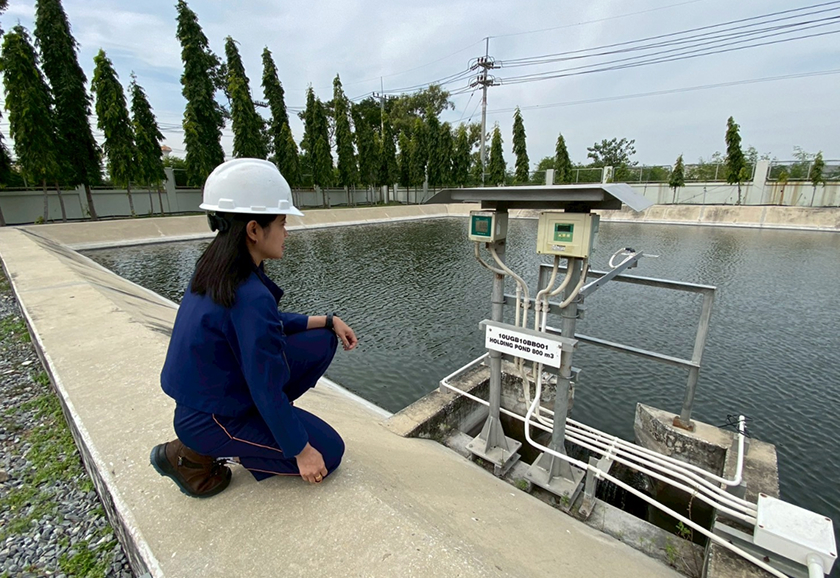
Bangpa-in Cogeneration Power Plant
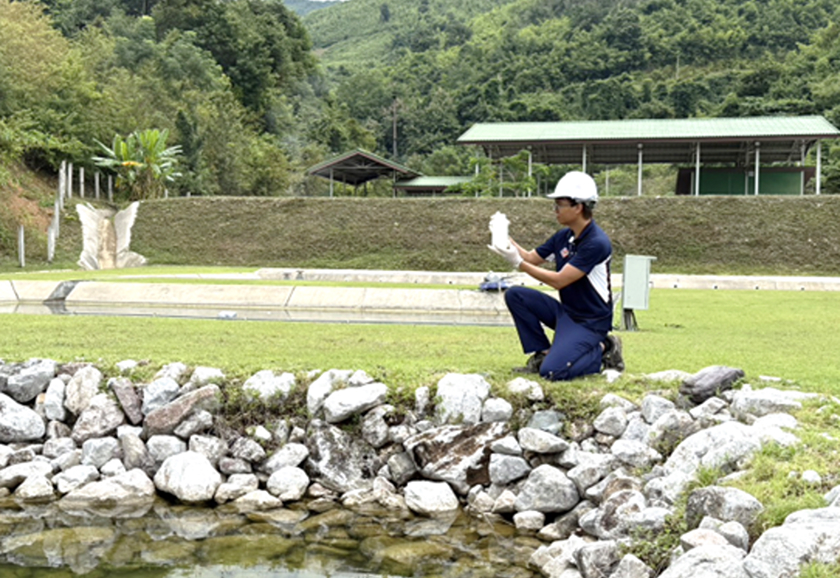
Xayaburi Hydroelectric Power Plant
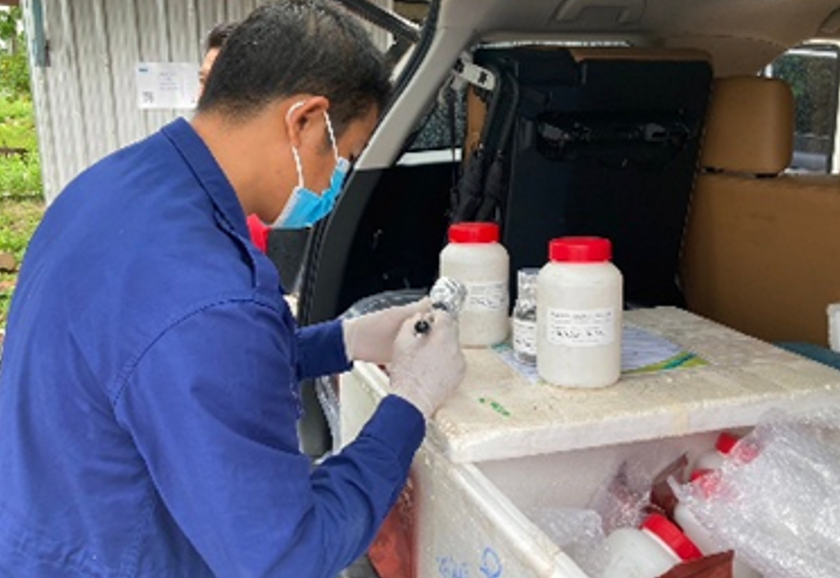
Nam Ngum 2 Hydroelectric Power Plant
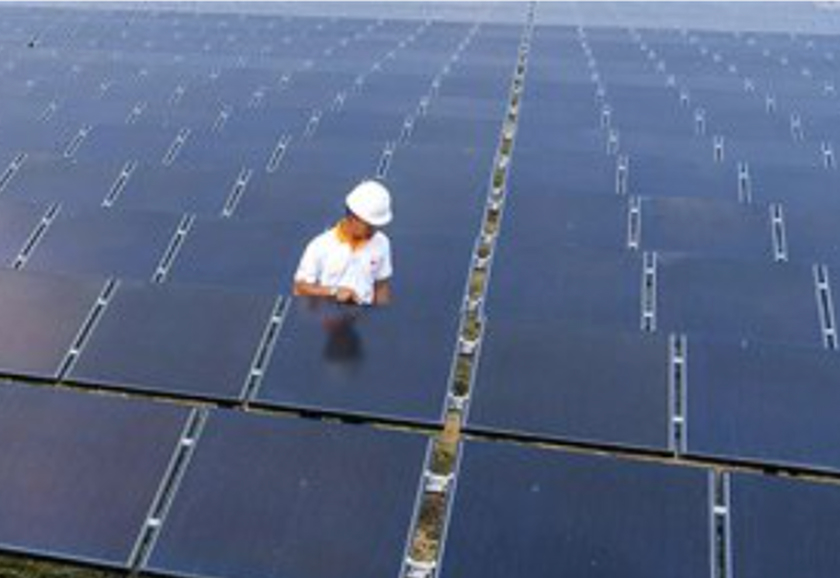
Bangkhenchai Solar Power Plant
Water Management in Power Plants:
-
Cogeneration Power Plants: Located in the Bangpa-in industrial estate, CKPower manages water efficiently and in compliance with environmental requirements. The plants have entered into a water supply agreement with TTW Public Company Limited, the water management operator within the industrial estate. Raw water is sourced from the Chao Phraya River and treated within the industrial estate before being supplied for use in the production process.
Wastewater treatment and discharge are managed by the designated system operator. Treated effluent is retained for one day before discharge into the industrial estate’s drainage canal for reuse within the system, reducing freshwater intake and supporting efficient water use.
Additionally, Bang Pa-in Cogeneration Plants ensure that discharged water complies with applicable legal requirements and the industrial estate’s water quality standards, with regular monitoring conducted to prevent potential long-term environmental impacts.
-
Hydroelectric Power Plants: CKPower’s hydroelectric power plants utilize water and groundwater for employee consumption and electricity production. Water is recirculated within the system prior to discharge to optimize resource efficiency. The Company implements systematic wastewater management measures within plant premises and ensures that discharged water quality complies with applicable legal requirements, environmental standards, and the ISO 14001:2015 Environmental Management System.
The Company also conducts regular water quality monitoring to promote efficient water use and reduce potential environmental risks from operations.
-
Solar Power Plants: CKPower’s solar power plants utilize water supplied from municipal water systems and surface water sources. The Company prioritizes efficient water use, recycling, and conservation to reduce unnecessary consumption. Water is mainly used for solar panel cleaning, which is essential to maintaining generation efficiency.
The Company ensures that discharged water complies with legal and environmental standards, with water use continuously monitored to enhance long-term water management performance.
Water resources management performance (GRI303-3, 303-4, 303-5)
CKPower has developed and implemented measures to optimize water resource utilization and reduce environmental impact. In 2025, CKPower had no environmental impacts resulting from the quality of discharged water, as it did not exceed the discharge limits, thereby supporting business sustainability while balancing organizational growth with responsible natural resource stewardship.
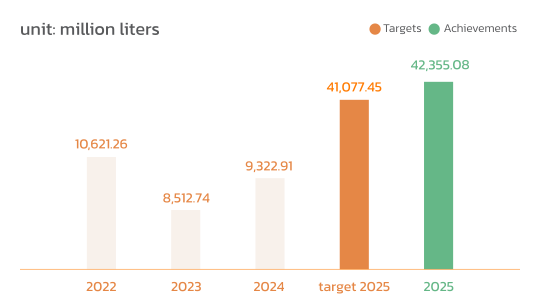
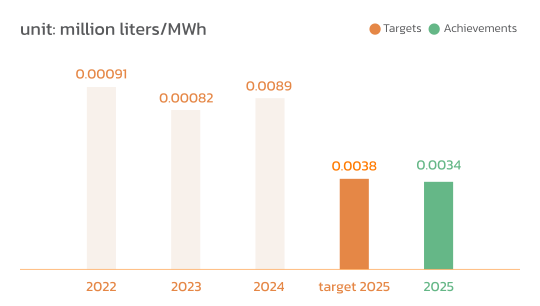
| Total water withdrawal from all area | Water Withdrawal per Total Energy Generated |
 |
 |
Remark:
- In 2022, CKPower expanded the scope of water indicator data collection to include the Xayaburi Hydroelectric Power Plant, Nam Ngum 2 Hydroelectric Power Plant, and CKPower’s headquarters for the first time
- In 2025, CKPower increased the data coverage of total water withdrawal indicators to include the cooling system of the Xayaburi power plant.
Waste Management (GRI306-1, 306-2, 306-3, 306-4, 306-5)
CKPower prioritizes sustainable waste management for all types of waste, including non-hazardous waste, hazardous waste, and organic waste. Waste management practices are conducted in compliance with applicable laws and regulations, as well as environmental guidelines relevant to the energy sector. These include the Hazardous Substances Act B.E. 2535 (1992), ministerial regulations and notifications issued by the Department of Industrial Works, the Code of Practice (COP)the Code of Practice (COP) established by the Energy Regulatory Commission (ERC)Energy Regulatory Commission (ERC), and the ISO 14001:2015 Environmental Management System.
In Lao PDR, the Company applies waste management practices in alignment with the ISO 14001:2015 standard to control and reduce environmental impacts as well as enhance resource efficiency. It emphasizes waste reduction at source through established procedures covering waste management across both office operations and all power plants.
The Company also promotes waste reutilization in line with circular economy principles, alongside recycling and environmentally responsible end-of-life management by authorized waste processors. In addition, continuous training and communication are provided to enhance employee awareness and ensure proper waste management practices across the organization.
Cogeneration Power Plants: Located in Bang Pa-In Industrial Estate, the power plant systematically manages all waste types through structured classification, quantity tracking, and transparent disposal processes. The plant strictly complies with Ministerial Regulations and notifications from the Department of Industrial Works, as well as the requirements of the Industrial Estate Authority of Thailand (IEAT). Waste reduction measures are implemented at the source within electricity and steam production processes, with a strong focus on reuse and recycling. Hazardous waste is handled and disposed of by licensed contractors in full legal compliance. Regular monitoring, inspection, and reporting ensure effective waste management, minimize environmental and community impacts, and support the organization’s long-term sustainability goals.
Hydroelectric Power Plant: CKPower’s hydroelectric power plants have established a systematic and comprehensive waste management system covering all waste categories. Waste generated on-site is classified into five categories: (1) general waste, (2) recyclable waste, (3) organic waste, (4) hazardous waste, and (5) infectious waste. Each category is subject to specific segregation and disposal methods in accordance with sanitation principles, environmental requirements, and the ISO 14001:2015 Environmental Management System.
In addition, the plant regularly provides waste management awareness programs for employees at all levels to promote proper practices and minimize environmental impacts.
Solar Power Plant: CKPower’s solar power plants apply waste minimization principles, emphasizing source reduction and proper segregation. Hazardous waste is transferred to authorized waste processors, while recyclable and reusable waste is managed in accordance with established standards.
These practices align with the ISO 14001:2015 Environmental Management System, applicable governmental environmental requirements, and the Code of Practice (COP) for renewable power plants issued by the Energy Regulatory Commission (ERC), ensuring safe, efficient, and sustainable waste management operations.
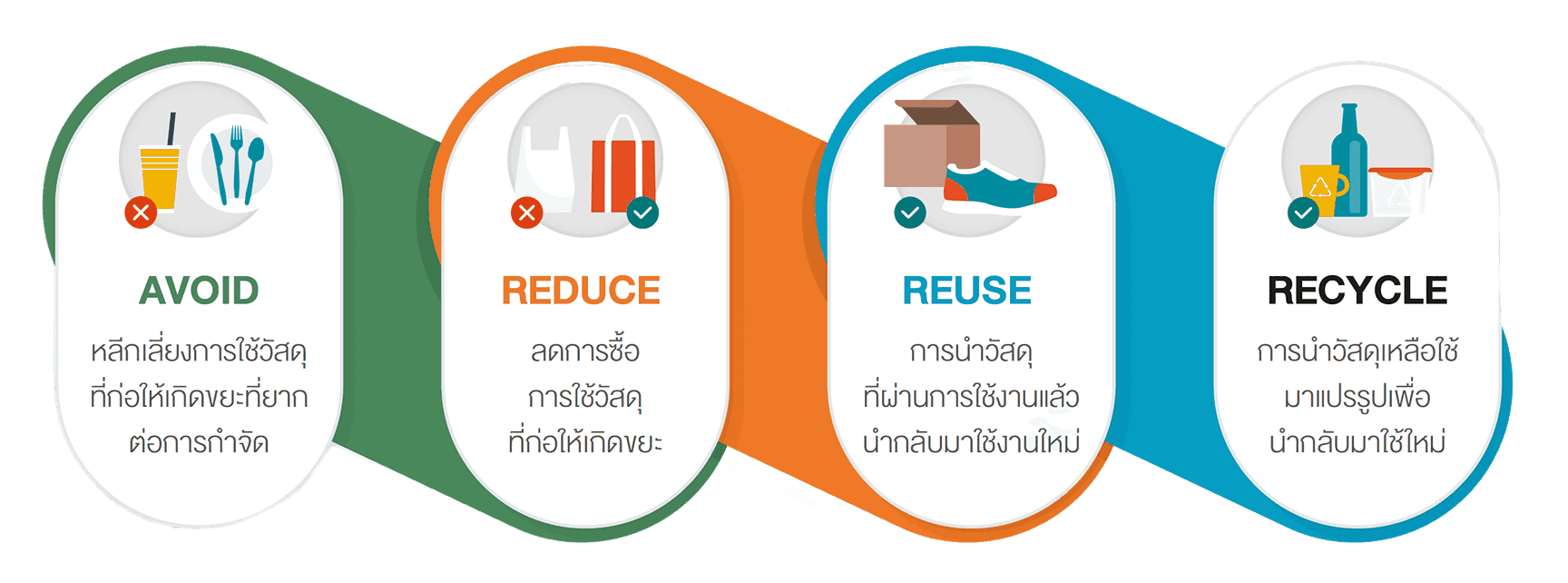
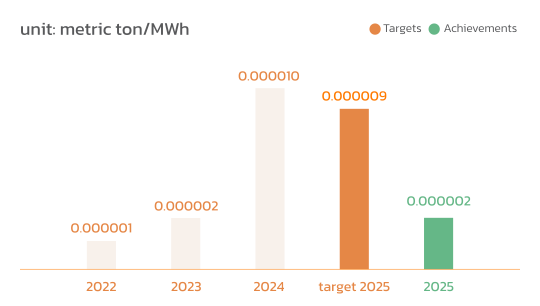
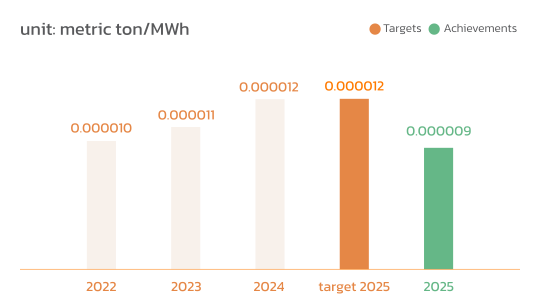
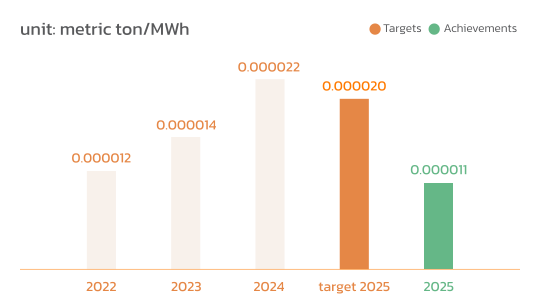
Waste Management Performance (GRI 306-3)
| Waste Management Performance | ||
|---|---|---|
| Total hazardous waste generated | Total non-hazardous waste generated | Total waste generated |
 |
 |
 |
| Total hazardous waste generated per total energy generated | Total non-hazardous waste generated per total energy generated | Total waste generated per total energy generated |
 |
 |
 |
Remark: CKPower expanded the scope of waste indicator data collection to cover its headquarters for the first time in 2022. In 2025, Nam Ngum 2 Hydroelectric Power Plant conducted a major overhaul during November–December.
Air Quality Management (GRI305-7)
CKPower is committed to rigorous air quality management practices. As 93% of CKPower’s total installed capacity is derived from renewable sources—primarily hydropower and solar power—these operations do not involve fossil fuel combustion and therefore do not produce air pollutant emissions during electricity generation.
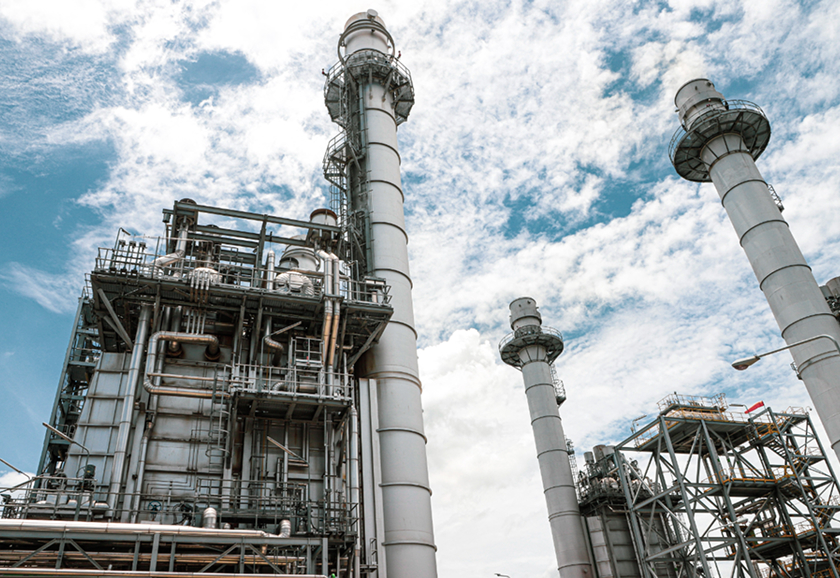
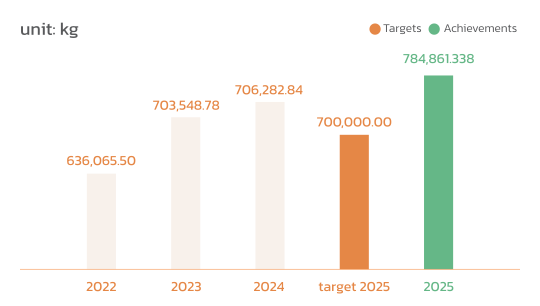
For the Bangpa-in Cogeneration Power Plant, which uses natural gas with low nitrogen content as fuel, the combustion process may produce thermal nitrogen oxide (NOx). To minimize NOx emissions, the Company utilizes Dry Low NOx Burner (DLE) technology to optimize combustion by adjusting the fuel-to-air ratio prior to combustion. This approach lowers chamber temperatures and achieves an approximately 40–50% reduction in NOx emissions compared with conventional systems. The technology also enhances fuel efficiency and reduces energy losses in electricity production.
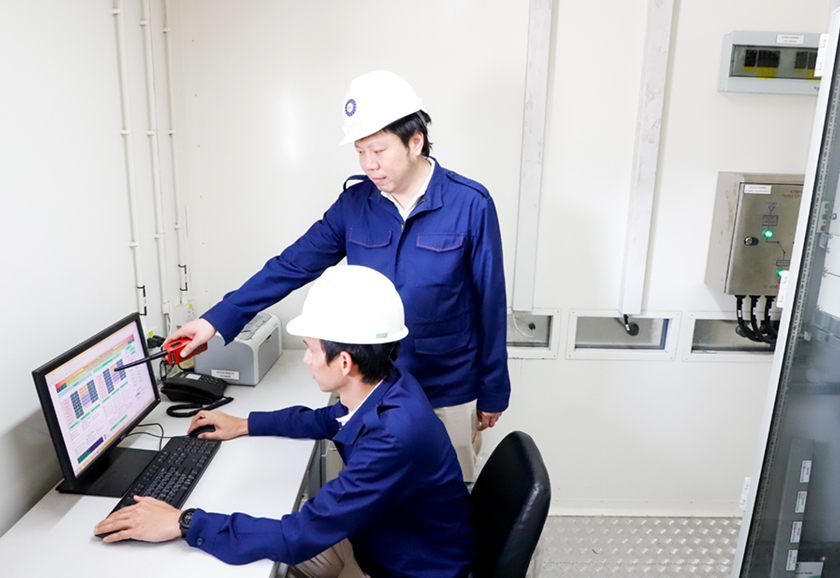
In addition, the Company has installed a Continuous Emission Monitoring System (CEMS) at the plant stack to monitor and track air pollutant emissions in real time. The system is also used to support continuous operational control and performance improvement. Air quality monitoring results are disclosed twice a year in the Environmental Impact Assessment (EIA) report.
Air Quality Performance (GRI 305-7)
| Air Quality Performance | ||
|---|---|---|
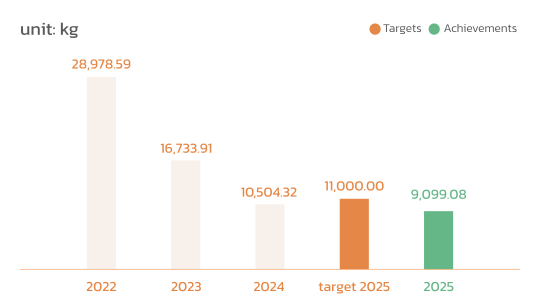
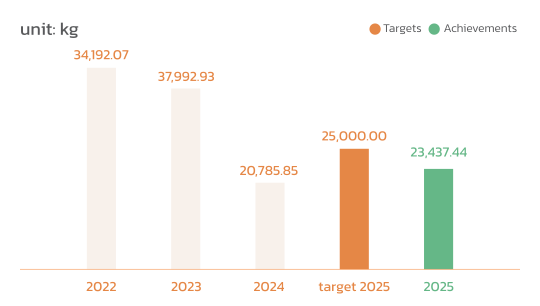
| Total NOx emitted | Total SOx emitted | Total particulate matter (PM) emitted |
 |
 |
 |
| Total NOx emitted per total energy generated | Total SOx emitted per total energy generated | Total particulate matter (PM) emitted per total energy generated |
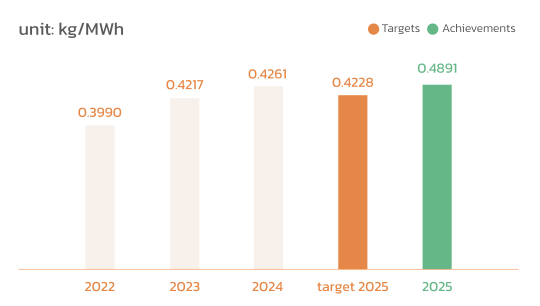 |
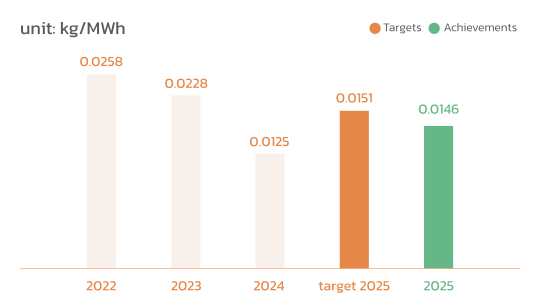 |
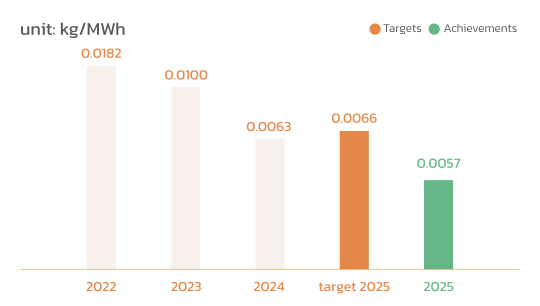 |
Remark: The Company’s only facility with air pollution emissions is the Bangpa-in Cogeneration Power Plant.
Long-term targets, 2025 targets, and 2025 achievements
| Environmental Management | |||
|---|---|---|---|
Law
|
|||
| Long-term Targets | |||
| No violations of environmental laws or regulations throughout operations |
No
|
||
| 2025 Targets | 2025 Achievements | ||
| Violations of environmental laws or regulations throughout operations |
No
|
No
|
|
| Fine for violations of environmental laws or regulations |
0
|
0
|
|
| An expected fine for violations of environmental laws or regulations |
0
|
0
|
|
| SDGs |   |
||
| Environmental Management | |||
|---|---|---|---|
Water Resources Management
|
|||
| Long-term Targets | |||
| Water quality of discharged water meets legal standards, and water resources are used efficiently |
Efficiently meet legal standards |
||
| 2025 Targets | 2025 Achievements | ||
| Total water withdrawal from all area |
≤ 41,077.45
|
42,355.08
|
|
| Total water withdrawal from all areas per total energy generated |
≤ 0.0038
|
0.0034
|
|
| Wateswater to be treated before discharge |
100% |
100% |
|
| Environmental Management | |||||||
|---|---|---|---|---|---|---|---|
Waste Management
|
Air Emissions
|
||||||
| Long-term Targets | |||||||
| General and hazardous waste management complies with legal standards |
Efficiently meet legal standards |
Air quality from chimneys complies with legal standards throughout operations |
Efficiently meet legal standards |
||||
| 2025 Targets | 2025 Achievements | 2025 Targets | 2025 Achievements | ||||
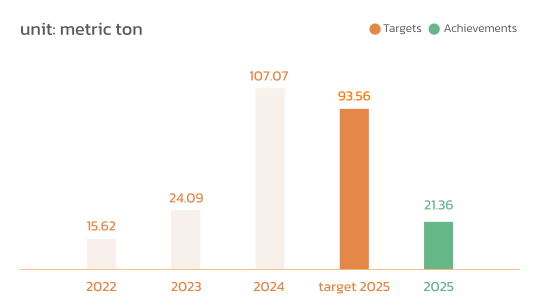
| Total weight of hazardous waste generated |
≤ 93.56
|
21.36
|
Total NOx emitted |
≤700,000
|
784,861.33
|
||
| Total weight of hazardous waste generated per production unit |
≤ 0.000009
|
0.000002
|
Total NOx emitted per total energy generated |
≤0.4228
|
0.4891
|
||
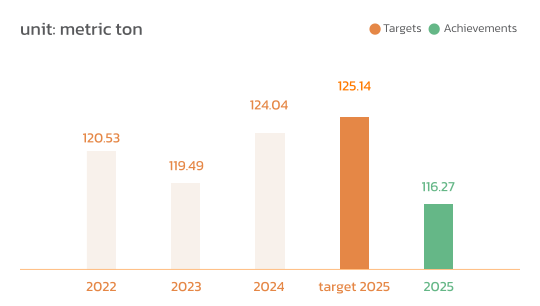
| Total weight of non-hazardous waste generated |
≤ 125.14
|
116.27
|
Total SOx emitted |
≤25,000
|
23,437.44
|
||
| Total weight of non-hazardous waste generated per production unit |
≤ 0.000012
|
0.000009
|
Total SOx emitted per total energy generated |
≤0.0151
|
0.0146
|
||
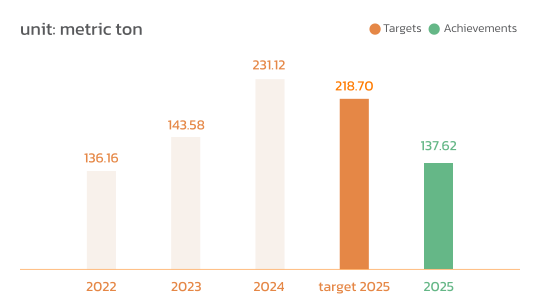
| Total weight of waste generated |
≤ 218.70
|
137.62
|
Total particulate matter (PM) emitted |
≤11,000
|
9,099.08
|
||
| Total weight of waste emitted generated per production unit |
≤ 0.000020
|
0.000011
|
Total particulate matter (PM) per total energy generated |
≤0.0066
|
0.0057
|
||
| Total weight of waste reused or recycled |
> 12.77
|
26.74
|
|||||
Projects Highlight in 2025
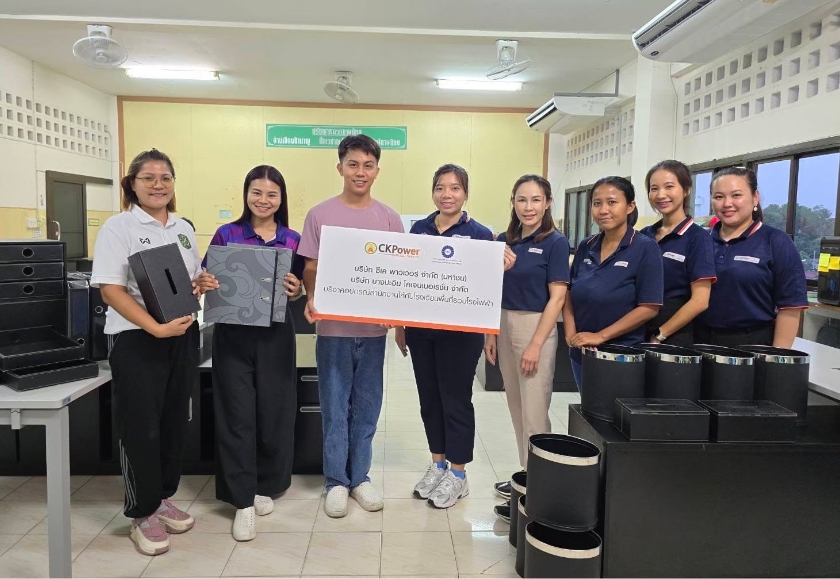
Paper X Project: Recycled 2,080 kg | New paper 39 reams | Local community support | Cost savings of 4,140 baht
Objective:
Paper-X is an ongoing project aimed at reducing waste by recycling paper, maximizing the utilization of paper waste, and encouraging employee participation in proper paper sorting processes. The project promotes sustainability by enhancing resource efficiency and fostering an organizational culture of environmental responsibility.
Implementation:
Paper collected for the project is categorized into three types:
- White paper
- Cardboard / brown paper
- Other paper types
The sorted paper is recycled into new paper and distributed to schools in communities surrounding the power plants to support education and promote learning opportunities for students.
2025 Performance:
- 2,080 kilograms of used paper were recycled.
- 39 reams of new paper were produced from the recycled paper.
- The recycled paper was donated to Bang Pa-in Rachanukroh 1 School as educational supplies.
- Cost saving of 4,140 Baht
Achievement:
The Paper-X project effectively reduces waste and paper consumption while also raising employee awareness about proper waste separation. It promotes resource recycling for sustainability and supports education for youth in communities around the Company’s power plants. This initiative supports CKPower’s environmental and social objectives.
Benefits:
- Reduction of paper usage and organizational waste
- Promotion of recycling and value enhancement of unused resources
- Strengthening community relations through educational support
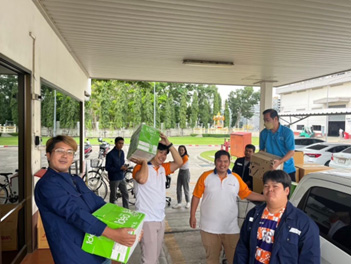
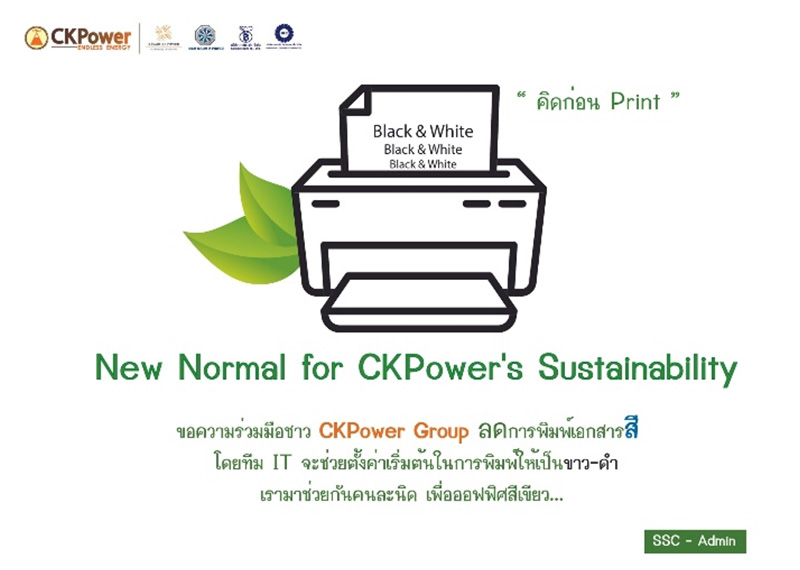
Think Before You Print Project: Reduced 946 color printouts | Cost savings of 1,970 baht
Objective:
CKPower has implemented the Think Before You Print Project to raise employee awareness of resource efficiency and minimize unnecessary consumption. The project aims to reduce color printing and promote the shift from hard copies to e-documents as an alternative to hard copies, effectively lowering environmental impact and reducing organizational costs.
Implementation:
- Employee awareness initiatives are carried out to promote efficient resource utilization.
- Unnecessary color printing is minimized, and the use of e-document is actively promoted across all departments.
- Operational processes are adjusted to ensure compliance with relevant laws and regulations, such as accounting standards.
2025 Performance:
- 946 fewer pages of color documents printed were reduced compared to the previous year.
- 1,970 baht in cost savings for the organization..
Achievement:
This project effectively raises employee awareness about efficient resource utilization and promotes the adoption of digital technology to reduce paper dependency. This initiative also lowers environmental impact, particularly through the reduction of waste paper and printing ink, and supports CKPower’s commitment to sustainability and resource efficiency.
Benefits:
- Reduction of natural resource consumption, such as paper and printing ink
- Operational cost reduction
- Contribution to environmental and sustainability goals
- Promotion of behavioral change among employees towards efficient resource utilization
Waste Sorting Bin Program: Separation at source | Supporting recycling
Objective:
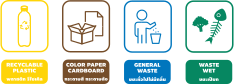
CKPower has implemented the Waste Sorting Bin Program to promote proper waste segregation in its offices, ensuring that each waste type is correctly processed, recycled, or repurposed for further use. This initiative supports efficient waste management and environmental sustainability by reducing improper waste disposal and enhancing resource efficiency.
Implementation:
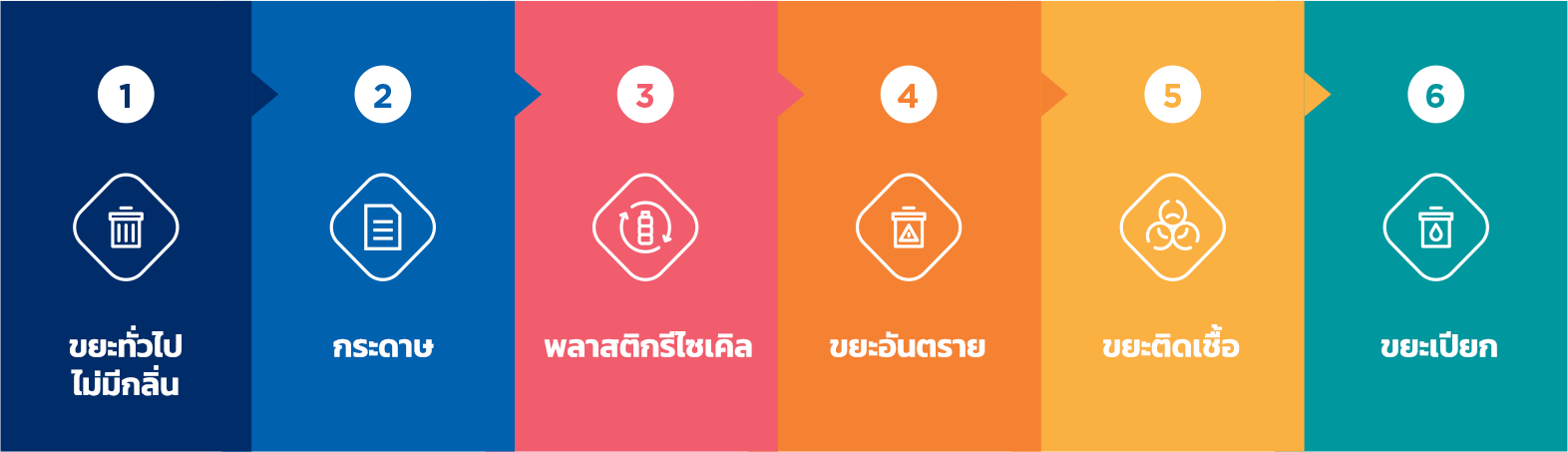
Six categories of waste bins have been strategically placed at various points within the offices to facilitate proper waste segregation.
- The weight of each type of waste is recorded as comparison data for determining the reduction of waste in the future.
- Employees are encouraged to learn how to separate waste at the source.
- Training and activities are organized to foster understanding of proper waste sorting.
Additional activities:
- A training program titled “Putting Waste in the Right Bin to Better Protect the World” has been organized to instill knowledge of proper waste sorting.
- Training documents and content have been distributed through the mobile application CKPower Academy to provide ready access for employees and executives.
2025 Performance:
- Employees demonstrated the ability to segregate waste properly, leading to more effective and appropriate waste disposal.
- Segregated waste was effectively valued in various forms, maximizing resource efficiency and minimizing environmental impact.
Achievement:
- The Waste Sorting Bin Program reduces waste disposal, encourages employee participation, and fosters awareness of proper waste segregation.
Benefits:
- Reduction of improper waste disposal
- Promotion of recycling and resource efficiency
- Cultivation of waste sorting habits in the organization
- Contribution to CKPower’s sustainability goals and reduction of environmental impacts
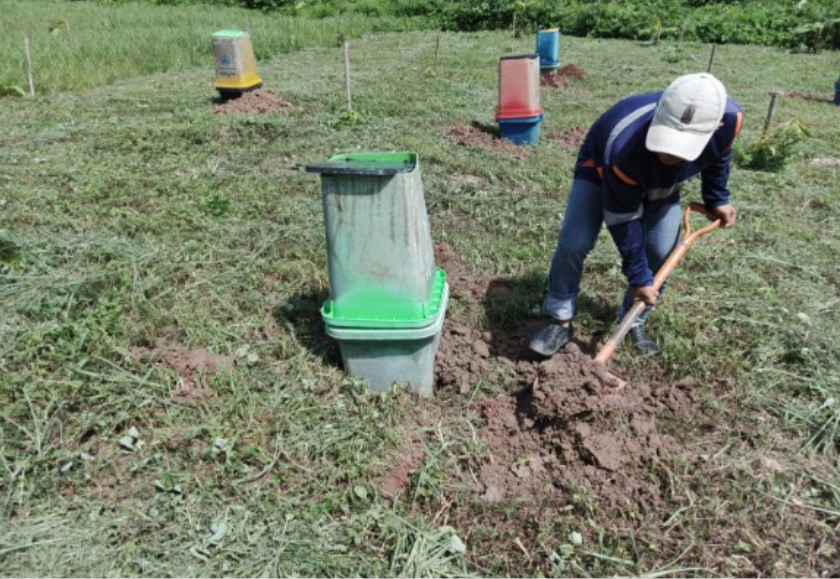
Green Composting Bin Project at Nam Ngum 2 Hydroelectric Power Plant: Waste reduced 3,001 kg | Emissions avoided 1.20 tCO2e
Objective:
The Green Composting Bin Project aims to promote sustainable environmental development by implementing efficient waste management practices at the Nam Ngum 2 Hydroelectric Power Plant. The project focuses on waste segregation to ensure proper disposal, recycling, or conversion into value-added products, supporting CKPower’s commitment to environmental sustainability.
Implementation:
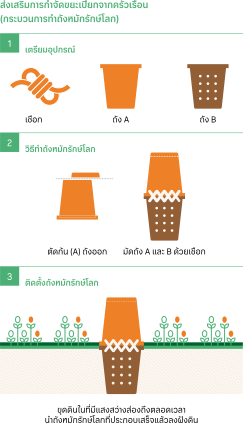
- CKPower has designed organic composting bins made from discarded materials for converting organic waste, such as food scrapes and grass clippings, from Nam Ngum 2 Hydroelectric Power Plant’s canteen, into Biowaste Soil Conditioner. This Soil Conditioner is then reused within the power plant for green area and agricultural gardens, promoting a circular economy and resource efficiency.
Primary objectives:
- Food waste reduction: Managing and reducing food scraps from the canteen to minimize landfill waste and protect the environment.
- Soil Conditioner cost reduction: Producing quality Biowaste Soil Conditioner from waste materials for use in the power plant’s Grow Green gardens, reducing the need for commercial soil conditioners.
- Environmental knowledge enrichment: Enhancing employee knowledge and understanding about organic composting production and efficient waste management, fostering a culture of environmental responsibility within the organization.
2025 Performance:
- Food waste reduction: Achieved a 100% reduction of food waste from the canteen sent to landfill, totaling 3,001 kilograms
- Greenhouse gas emissions avoided: Composting food waste instead of landfilling avoided approximately 1.20 tCO2e of greenhouse gas emissions.
- Pollution prevention: Contributed to reducing potential water and soil pollution associated with landfill disposal.
- Resource Circularity: Promoted resource circularity by reducing the use of fertilizers for maintaining green areas within the power plant.
- Currently improving the quality of Biowaste Soil Conditioner, with expectations to produce high-quality Soil Conditioner by 2025 for use in green space maintenance and agricultural activities within the power plant.
Achievement:
The Green Composting Bin Project reflects CKPower’s commitment to sustainable waste management by reducing organic waste and creating value-added products. This initiative minimizes environmental impact, lowers costs, and fosters waste management awareness within the organization.
Benefits:
- Reduction of food waste sent to landfills
- Cost reduction in soil conditioners for gardening and agricultural activities.
- Employee knowledge enrichment on waste management and organic composting.
- Contribution to CKPower’s sustainability targets and environmental conservation initiatives.

Bottle Caps to Desks Project: Bottle caps collected 10 kg | Supporting education
Objective:
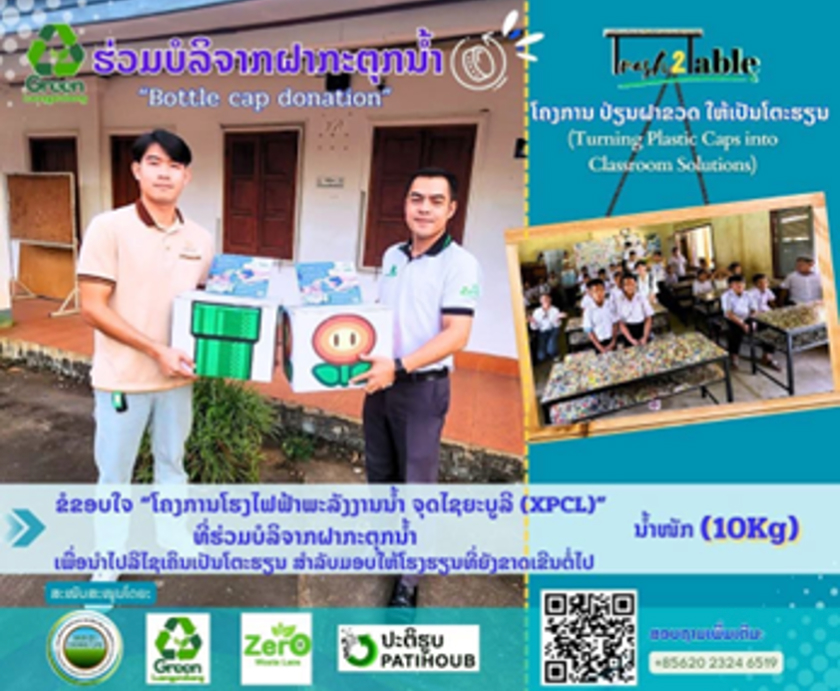
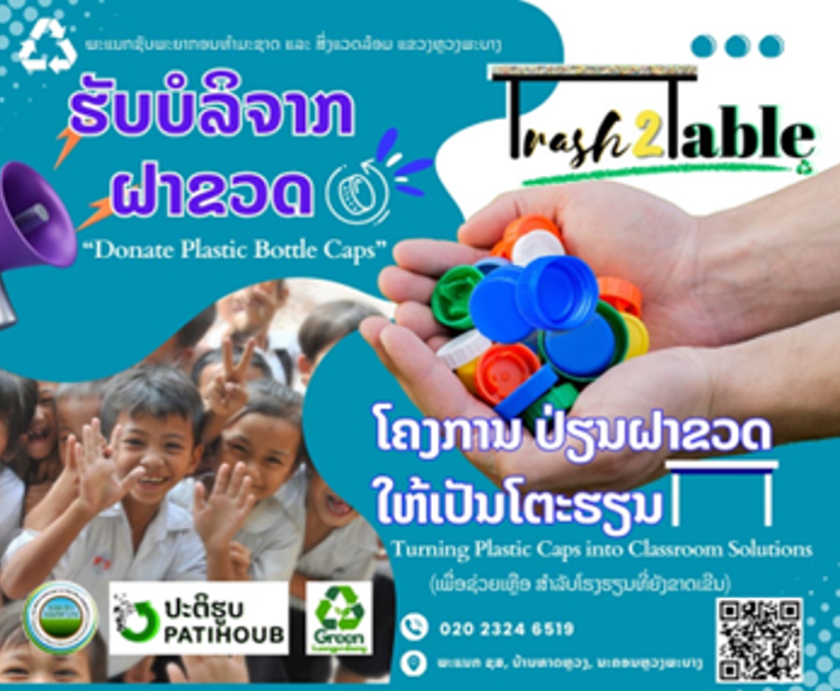
CKPower has collaborated with the Department of Agriculture, Forestry and Environment of Luang Prabang Province to support the donation of used plastic bottle caps for recycling into student desks. These desks are provided to under-resourced schools in Luang Prabang Province, Lao PDR. The project encouraged employees at Xayaburi Hydroelectric Power Plant to collect and donate used plastic bottle caps from April to October, promoting environmental conservation alongside social contribution.
Implementation:
- Raise employee awareness of the value of waste segregation and its benefits in transforming waste into new products.
- Encourage employee participation in social contribution by supporting education and creating opportunities for local communities.
- Strengthen positive relationships between the power plant and government agencies.
2025 Performance:
- Collected a total of 10 kilograms of plastic bottle caps.
Achievement:
Delivered 10 kilograms of plastic bottle caps to the Department of Agriculture, Forestry and Environment of Luang Prabang Province in October for recycling into student desks.
Benefits:
- Contribution to recycling waste into practical products that benefit local communities.
- Participation of employees, strengthening awareness of systematic waste management.
- Collaboration with government agencies in advancing environmental and sustainability goals.
UF Backwash Reuse Project (BIC-1): Water saved 1,315 cubic meters | 3,960 cubic meters per year
Objective:
The UF Backwash Reuse Project for the BIC-1 Cooling Basin aims to enhance water efficiency by reducing service water intake. The project also promotes responsible water use among employees and supports the Company’s progress toward long-term sustainability.
Implementation:
- Upgrade the backwash piping system by redirecting water from the Neutralizing Tank for reuse in the Cooling Tower Basin.
- Reduce freshwater intake by reusing UF backwash water within the cooling tower system to enhance water use efficiency and support environmental and greenhouse gas reduction goals
2025 Performance:
- Saved 1,315 cubic meters of service water used for replenishing the Cooling Tower Basin between July - November 2025.
Achievement:
Reduced water resource consumption by 3,960 cubic meters per year.
Benefits:
- Reduced water consumption by 3,960 cubic meters per year.
- Supported water reuse and promoted efficient resource utilization.
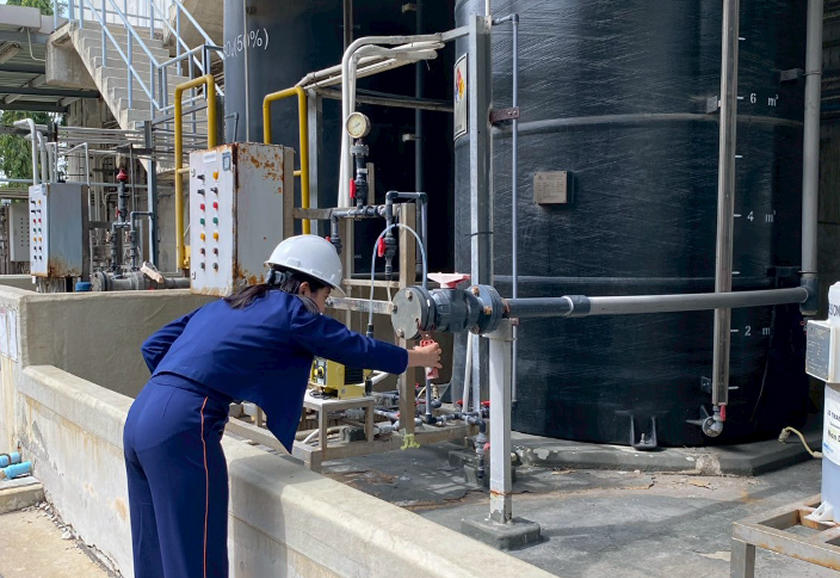
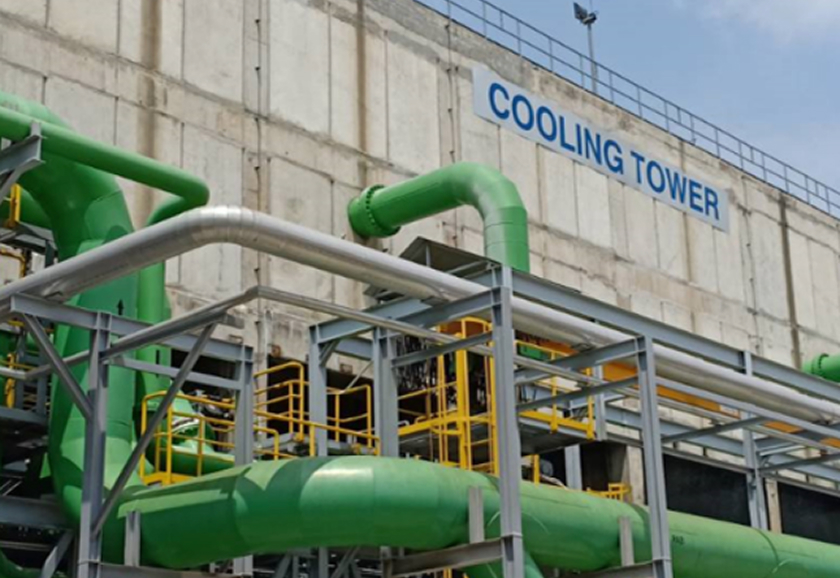
Adjust Chloride Control Project for Cooling Tower BIC1: Reduced water 107,751 cubic meters | Cost savings of 2.84 million baht
Objective:
The Adjust Chloride Control Project for Cooling Tower BIC-1 (ongoing project) focuses on enhancing water efficiency in the cooling tower system and reducing water loss by adjusting the chloride control range, allowing the processed water to be reused before discharge. This initiative supports sustainable water resource management and efficient water utilization.
Implementation:
- The chloride control range of the cooling tower system is adjusted to increase water recirculation capacity.
- Effluent discharge and make-up water consumption are effectively reduced, contributing to water conservation and cost efficiency.
2025 Performance:
- Efficiently reduced blowdown discharge from the cooling tower system.
- Reduced makeup water consumption by more than 107,751 cubic meters (equivalent to approximately 107.75 million liters).
- Achieved cost savings of 2,839,238.85 baht.
Achievement:
This project reflects CKPower’s commitment to efficient water resource utilization and minimizing resource loss in energy production. It reduces water costs while reinforcing the company’s environmental responsibility and sustainable resource management.
Benefits:
- Reduction in water consumption during energy production
- Promotion of sustainable water resource management
- Reduction of environmental impacts from effluent discharge
- Alignment with the Company's sustainable development goals and water resource management objectives.
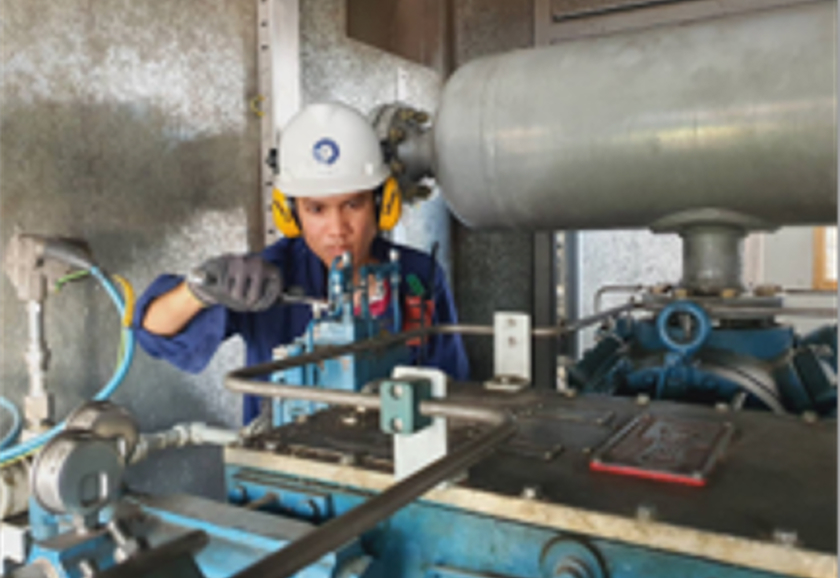
Lubricating Oil Reduction Project for Gas Compressors: Reduced 8,600 liters | Cost savings 3.05 baht | Reduced 21.62 tCO2e
Objective:
The Lubricating Oil Reduction Project for Gas Compressors (ongoing project) aims to enhance lubricant use efficiency in gas compressor equipment by optimizing the oil injection system to align with actual operational requirements. The initiative seeks to reduce excessive oil use, minimize the generation of hazardous waste from used oil, and sustainably lower operational costs for the power plant.
Implementation:
- Improve the lubricating oil injection system of gas compressors to optimize usage efficiency
- Inspect and analyze the performance of the existing system to identify areas for improvement
- Replace or modify equipment and control processes to match the actual workload of the machinery
- Implement the project on an ongoing basis with continuous monitoring of oil consumption and hazardous waste reduction
2025 Performance:
- Reduced lubricating oil consumption and hazardous waste generation by approximately 8,600 liters
- Achieved cost savings of approximately 3,051,400 baht from reduced oil purchases and disposal expenses
- Reduced indirect greenhouse gas emissions from used oil transportation for disposal by 21.62 tCO2e
Achievement:
- Significantly reduced resource usage and hazardous waste generation
- The upgraded oil injection system operates efficiently and reliably over the long term
- The project is being implemented continuously and has potential for replication in other machinery systems
Benefits:
- Reduction of hazardous waste by up to 8,600 liters, contributing to environmental impact mitigation.
- Reduction in operational costs for the power plant.
- Optimization of energy and resource management efficiency.
- Support for environmental goals and sustainable waste management practices in alignment with sustainability principles.
Sustainability report 2025