Occupational Health and Safety

Impact on Business (GRI3-3)
Challenges and Opportunities (GRI3-3)
CKPower faces challenges from occupational health and safety risks related to high-risk working environments, unsafe work practices, fluctuating weather conditions, and rising environmental pollution. These factors may adversely affect the health, lives, and property of employees, contractors, and relevant stakeholders, as well as the continuity and efficiency of business operations.
To mitigate and manage such impacts, the Company has established a systematic occupational health and safety management system covering preventive, responsive, and remedial measures, while promoting a safety culture across the organization and throughout the supply chain. The Company emphasizes enhancing knowledge, awareness, and safe working behaviors at all levels to improve the quality of life of employees, suppliers, contractors, customers, and surrounding communities.
These approaches enable the Company to elevate its occupational health and safety standards, reduce workplace accidents and injuries, and strengthen stakeholder confidence. The Company has set a target to become an “accident-free and injury-free organization”.
In addition, CKPower has deployed an Accident and Safety Incident Reporting System using Maximo to systematically track, record, and analyze safety incidents. The data derived from this system is utilized to improve preventive measures, reduce risks, and reinforce confidence in safe operations.
Commitment (GRI3-3)
CKPower considers occupational health and safety as a critical factor in achieving sustainable business operations. The Company is committed to aligning the work processes of employees, contractors, and relevant stakeholders with international standards to prevent accidents, injuries, and work-related illnesses, while promoting health and occupational well-being at all levels of the organization.
CKPower is committed to becoming a zero-accident organization by fostering a proactive safety culture, with a strong focus on both Operational Safety (OS) and Personal Safety (PS) across all employees and contractors. To support this commitment, the Company has implemented an OHS management system aligned with company policies, applicable laws, and international safety standards to ensure a safe working environment for all personnel.
CKPower also conducts ongoing occupational health and safety risk assessments and reviews the risks associated with power plant activities at least once a year, covering hazard identification related to machinery, chemicals, and unsafe environments. This process involves communicating risks and control measures to employees before work begins to minimize accident risks and enhance operational safety and long-term sustainability.
Operational Guidelines (GRI3-3, 403-2)
CKPower has established an Occupational Health and Safety Policy and implemented a comprehensive OHS Management System integrated into the Company’s Code of Business Conduct, addressing workplace environmental conditions, safety, and occupational health and hygiene.
The Company systematically identifies hazards and assesses work-related risks across its power plant operations, including activities involving machinery, chemicals, and potentially hazardous working environments. It also establishes clear control measures and operational procedures, which are regularly reviewed and continuously improved to ensure alignment with operational contexts and evolving risks.
Currently, 50% of CKPower’s power plants have obtained ISO 45001:2018 certification for Occupational Health and Safety Management Systems, transitioning from the former OHSAS 18001 standard.
Occupational Health and Safety Policy
Strategy and Roadmap
Occupational Health and Safety Management System (GRI403-1,403-3, 403-4)
CKPower has implemented an Occupational Health and Safety Management System in compliance with applicable laws, regulations, and standards relevant to power plant operations in Thailand and the Lao PDR. These include labor laws, chemical management regulations, fire prevention and suppression regulations, and occupational health and safety regulations. The system is designed to ensure safe, responsible, and internationally aligned operations.
The Company has established an Occupational Health and Safety Policy covering all activities, operational sites, and all employees and contractors. The system is certified to ISO 45001:2018 and serves as a key mechanism for continuously enhancing workplace safety standards and promoting the health and well-being of all personnel.
CKPower’s occupational health and safety strategy emphasizes systematic and continuous risk management throughout the entire operational lifecycle. It covers risk assessment and control, the provision of appropriate occupational health services, safety training and competency development for employees and contractors, regular monitoring and review of safety performance, and the effective management of accidents and safety incidents.
In addition, the Company promotes participation, consultation, and communication on occupational health and safety at all organizational levels. This enables personnel to express concerns, report hazards, and actively contribute to the development and improvement of safety measures, thereby cultivating a proactive safety culture and reinforcing confidence in a safe, healthy, and supportive working environment throughout the organization.
CKPower has established and enforced a Code of Business Conduct on Occupational Environment, Health, and Safety to serve as practical guidelines across the organization and throughout the supply chain, as follows:


Hazard Identification and Occupational Health and Safety Risk Assessment (GRI403-2, 403-7)
CKPower mandates that the safety department adhere to procedures for identifying hazards and assessing occupational health and safety risks before commencement of work. These procedures were developed with the Job Safety Analysis (JSA) approach, which comprises a total of seven steps as follows:


Employees in the Safety Department perform Occupational Health and Safety (OHS) Risk and Hazard Assessments and apply the outcomes of hazard identification and risk assessment to make improvements and develop safety management guidelines. Additionally, key performance indicators (KPIs) have been established for effective hazard identification and risk assessment, ensuring compliance with standards and continuous improvement. The occupational health and safety risk assessment results for 2025 are as follows:
Occupational Health and Safety Risk
Work at Height |
Hot Work |
Work in Confined Spaces |
|---|---|---|
|
At-risk Persons
Employees and contractors operating in power plants Incident Type and Risk Level
Preventative and Corrective Measures
|
At-risk Persons
Employees and contractors operating in power plants Incident Type and Risk Level
Preventative and Corrective Measures
|
At-risk Persons
Employees and contractors operating in power plants Incident Type and Risk Level
Preventative and Corrective Measures
|
Work in high voltage areas |
Handling of hazardous equipment such as heavy or sharp objects |
Chemical-related work |
|
At-risk Persons
Employees and contractors operating in community power plants along transmission lines Incident Type and Risk Level
Preventative and Corrective Measures
|
At-risk Persons
Employees and contractors operating in power plants Incident Type and Risk Level
Preventative and Corrective Measures
|
At-risk Persons
Employees and contractors operating in power plants and surrounding communities in the case of a chemical leak Incident Type and Risk Level
Employee or contractor sustains injuries due to chemical exposure from leaks or splashes, including contact with skin or eye contamination: High risk Preventative and Corrective Measures
|
Detailed results of the 2025 occupational health and safety risk assessment and additional preventive measures can be found on the website.
Health and Safety Risk Assessment for New Projects and Operations
CKPower conducts occupational health and safety risk assessments for all potential new projects, and significant investments during the due diligence and project development stages. The assessment process covers workplace hazards, contractor and construction safety risks, operational and process safety, emergency preparedness, legal compliance, and potential impacts on employees, contractors, communities, and surrounding environments.
Assessment findings are integrated into project planning, engineering design, contractor management requirements, and risk mitigation measures prior to project approval and operational implementation.
Occupational Safety and Health Supervision (GRI403-4)
CKPower implements a comprehensive occupational health and safety governance system. The Company’s Board of Directors oversees and establishes occupational health and safety policies in alignment with the Company’s objectives and targets, with transparency to support regular review and performance implementation. In addition, the Safety Department has been designated as the primary entity responsible for monitoring, inspecting, and continuously improving the work environment to ensure workplace safety and compliance with international standards. This ensures compliance with international safety standards and promotes a safe and healthy workplace.
CKPower establishes quantitative safety targets for each power plant, utilizing these metrics to improve safety measures, maintain workplace safety statistics, and ensure compliance with employee health and safety standards. This approach supports CKPower’s goal of systematically achieving safety and occupational health development goals.
CKPower has also formed a dedicated committee for Occupational Safety, Health, and Environment (OSHE), chaired by the Power Plant Manager and comprising representatives from various departments, with the Security Department serving as the secretary. The primary responsibilities of this committee are to develop and enhance the occupational health and safety management system. Regular committee meetings are held to assess progress and monitor performance according to established policies and management systems.
Occupational Safety Management (GRI2-25, 403-2)
Incident Reporting Channels
CKPower provides channels for employees and contractors to report accidents, unsafe conditions, and activities that pose accident risks through various channels. It has also established guidelines for accident response, investigation, and appropriate corrective actions based on safety risk assessments for employees and contractors, as follows:
- Safety officers or the Occupational Safety, Health, and Environment Committee via telephone and E-mail
- Power plant managers via telephone and E-mail
- WE CARE CONVERSATION online form
- Complaint and suggestion form
CKPower has established practical guidelines for inspection and corrective action in the case of accidents, based on safety risk assessments for employees and contractors. The Company also evaluates and maintains risk registers for potentially hazardous activities.
Furthermore, basic safety rules allow employees or relevant personnel to stop work and take corrective action when hazards are identified. CKPower also convenes meetings to discuss control measures for medium and high-risk activities and presents risk reduction plans to executives for approval and implementation.
Work-related injury or illness investigation procedure (GRI403-2)
CKPower has established a systematic incident investigation process covering work-related injuries or illnesses, accidents, and near-miss events. Designated safety officers prepare a Near Miss and Incident Report, which is submitted to the Power Plant Manager for review and approval.
The report includes root cause analysis, the determination of corrective and preventive actions (Corrective and Preventive Actions: CAPA), and follow-up measures to prevent recurrence.
The workplace injury or illness investigation procedure is as follows:
Step 1
Step 2
Step 3
Step 4
Step 5
Step 6
Work-Related Injuries (GRI403-9)
CKPower places strong emphasis on occupational health and environmental protection for all employees, contractors, and suppliers throughout the supply chain. All workers are covered under the Company’s Occupational Health and Safety Management System. The Company is committed to becoming an accident-free and injury-free organization and systematically collects safety data to establish targets, monitor performance, and continuously improve operational effectiveness.
To achieve this, CKPower has established the Loss Time Injury Frequency Rate (LTIFR) as one of key occupational health and safety indicators, with a target of zero LTIFR calculated per 1,000,000 working hours. This index is used to evaluate the effectiveness of safety management measures. Additionally, CKPower comprehensively collects and monitors other safety performance indicators, including Total Recordable Injuries (TRI), Total Recordable Injury Rate (TRIR), Near Miss incidents, and Near Miss Frequency Rate (NMFR). These indicators are used to analyze performance trends, identify potential risks, and strengthen proactive preventive measures.
In 2025, the Company recorded an incident resulting in a lost time injury. Following the incident, appropriate care and remediation were provided to the affected individual. A thorough root cause review was conducted, and corrective and preventive measures were subsequently implemented to prevent recurrence and continuously enhance workplace safety standards, as detailed below:
A contractor sustained injuries when a reflective safety vest came into contact with moving machine parts, resulting in injuries to the right arm and right chest.
The injured contractor was promptly transported to Xayaburi Hospital for initial medical treatment. The attending physician provided wound care and administered a tetanus vaccination. The contractor was subsequently discharged to rest at the accommodation in the evening and was later referred for a comprehensive medical examination at the contractor’s designated hospital in Thailand.
- Conducted additional safety training for contractors, emphasizing proper use of personal protective equipment (PPE).
- Reinforced proper wearing of reflective safety vests to prevent entanglement with machinery.
- Installed and upgraded protective guards and safety devices at identified high-risk machine points.
- Reinforced strict safety compliance for contractors within the power plant, with enhanced on-site supervision.
A contractor sustained an injury while removing the trunnion from the runner hub using a hydraulic jack. During the pulling process, the jack lost stability, tipped over, and struck the contractor’s head.
The injured contractor received immediate first aid and was subsequently transported to the power plant’s Medical Center. The attending physician cleaned and sutured the wound with seven stitches and recommended further X-ray examination at Xayaburi Hospital for proper diagnosis and treatment.
- Conducted additional safety training for contractors, emphasizing proper use of PPE, particularly safety helmets.
- Organized Toolbox Talks with contractors to enhance awareness of hazards related to falling objects.
- Established clear communication protocols and reviewed work positioning during lifting and heavy component assembly.
A contractor experienced dizziness and subsequently lost consciousness while mixing cement at the Fish Research Center. The individual fell backward, striking the head on a rock and sustaining injuries with seizure symptoms. The contractor was promptly transported to the power plant’s Medical Center for further medical treatment.
The Company’s medical team provided initial treatment, including cleaning and suturing the head wound with four stitches. The injured contractor was advised to rest for one day and subsequently returned to work as normal.
- Provided education to workers on the importance of adequate rest to support health and workplace safety.
- Encouraged regular rest breaks and hydration to reduce the risk of dehydration.
- Delivered guidance on nutrition, hydration, and health management for prolonged working hours
A road traffic accident occurred involving a contractor responsible for transporting employees during the morning shift. The incident resulted in injuries to two employees and the fatality of the contractor driver.
The injured individuals were immediately transported to a nearby hospital for medical treatment. Comprehensive medical examinations were conducted, and their conditions were closely monitored. The injured were granted medical leave until they were medically fit to safely resume work.
In the case of a contractor fatality, the contractor company provided appropriate assistance and compensation in accordance with applicable rights and relevant regulations.
This incident was escalated to top management for oversight and to inform the review and enhancement of relevant safety and risk management measures.
- Reinforced safe driving requirements, with emphasis on adequate rest to prevent fatigue.
- Revised the operational plan to primarily utilize company-employed drivers for employee transportation in order to enhance supervisory effectiveness and ensure compliance with CKPower’s safety standards.
- Promoted health and work-readiness awareness, including rest, hydration, and nutrition guidance.
* This is classified as a Total Recordable Injury (TRI) but is not counted as part of the Lost Time Injury Frequency Rate (LTIFR) since, after first aid treatment and medical evaluation, all cases were able to return to work within 24 hours.
** This is classified as a Lost Time Injury Frequency Rate (LTIFR)
Health & Safety Performance Benchmarking
CKPower benchmarked its occupational health and safety performance against EGAT, a leading power utility organization in Thailand, to evaluate safety performance effectiveness and identify opportunities for continuous improvement. In 2025, CKPower reported zero employee fatalities, while EGAT reported two employee fatalities. Both organizations recorded one contractor fatality during the reporting year. CKPower also reported lower injury rates than EGAT, reflecting the Company’s proactive safety management and continuous operational risk control efforts.
Work-Related Illnesses
CKPower employs a comprehensive hazard assessment method based on the Hierarchy of Control principles to prevent work-related illnesses. This system categorizes hazard control into six levels:
- Elimination – Removing the hazard from the process entirely.
- Substitution – Replacing hazardous materials, processes, or equipment with less hazardous alternatives.
- Engineering Controls – Implementing physical changes to the work environment to reduce exposure to hazards.
- Warnings – Providing appropriate signage and alerts to inform workers of potential dangers.
- Administrative Controls – Implementing safety training, work planning, and modifying work procedures to minimize risks.
- Personal Protective Equipment (PPE) – Ensuring the availability and proper use of protective gear to safeguard workers.
During the preliminary hazard assessment, CKPower evaluates control methods at each level to prevent work-related illnesses arising from exposure to hazards or unsafe work environments. This proactive approach ensures that potential risks are effectively managed before they impact workers’ health.
Pandemic Prevention Guidelines (GRI 403-6, 403-10)
Although the COVID-19 pandemic situation has shown signs of easing, the company remains consistently mindful and concerned about the safety and occupational health of our employees, partners, customers, shareholders, and relevant stakeholders. Comprehensive preventive measures and policies have been established to mitigate the spread of infectious diseases, including:
- The Company tasked the Occupational Safety, Health, and Environment Committee with the responsibility of establishing policies and various practices during the outbreak of COVID-19, such as the "E-Work Permit System."
- Provide annual influenza vaccinations and hepatitis B immunization programs to safeguard employee health and prevent communicable disease transmission. During major outbreaks, including COVID-19, ensure comprehensive vaccination coverage to strengthen immunity and minimize operational disruption risks.
- Establish epidemic preparedness measures and a Business Continuity Management Committee to oversee emergency response and ensure operational continuity during widespread disease outbreaks, including assessment and mitigation of potential impacts on employees, their families, customers, business partners, shareholders, and surrounding communities.
- Implement preventive measures to continuously control epidemic risks and establish response plans in the event of confirmed cases to ensure business continuity. The power plant control room is designated as a high-control area, with restricted access limited to authorized personnel only, to maintain operational stability and ensure electricity generation proceeds efficiently in line with operational plans without disrupting customer demand.
Long-term targets, 2025 targets, and 2025 achievements (GRI3-3)
| Occupational Health and Safety | ||||||
|---|---|---|---|---|---|---|
Occupational Health and Safety |
||||||
| Long-term Targets | ||||||
| Fatalities from work-related injuries involving both employees and contractors. |
0
|
Lost-time injuries (LTI) both employees and contractors |
0
|
|||
| Lost-time injuries frequency rate (LTIFR) both employees and contractors |
0
|
|||||
| 2025 Targets | 2025 Achievements | |||||
| Fatalities from work-related injuries involving both employees and contractors. |
0
|
1
|
||||
| Lost-time injuries (LTI) both employees and contractors |
0
|
2
|
||||
| Lost-time injuries frequency rate (LTIFR) both employees and contractors |
0
|
2
|
||||
| SDGs |    |
|||||
Training in Occupational Health and Safety in 2025
| Group | Indicator | Unit | CKPower Head Office | Xayaburi Hydroelectric Power Plant | Nam Ngum 2 Hydroelectric Power Plant | Bangpa-in Cogeneration Power Plant | Solar Power Plant | Total |
|---|---|---|---|---|---|---|---|---|
| Employee | OHS training program | Number of Course | 3 | 28 | 6 | 8 | 18 | 63 |
| OHS training hour | Hours | 12 | 50,768 | 268 | 174 | 1,487 | 52,709 | |
| Contractor | OHS training program | Number of Course | 0 | 12 | 12 | 12 | 61 | 97 |
| OHS training hour | Hours | 0 | 9,696 | 3,180 | 9,540 | 1,290 | 23,706 |
Project Highlight 2025 (GRI403-5)
Safety Capacity Building & Contractor Safety Program
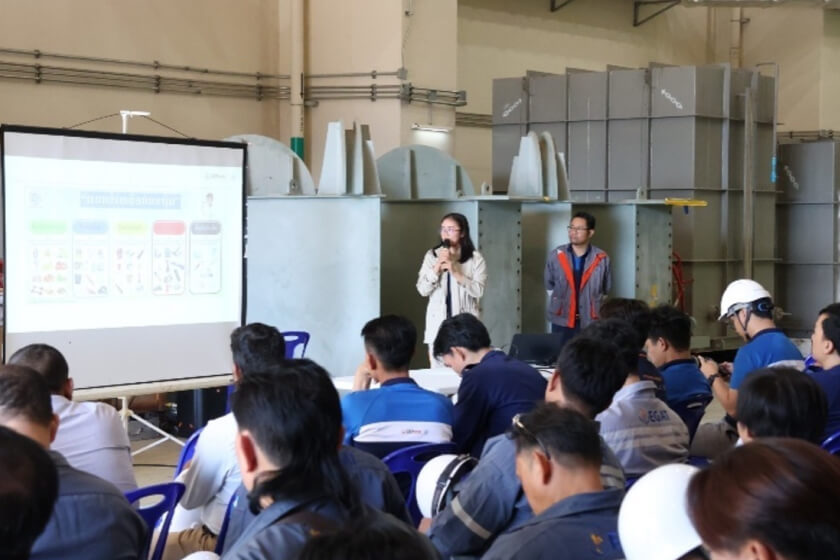
| Project/Activity | Participants | Description | Target | Outcome |
|---|---|---|---|---|
| Safety Training for Contractors Working on Unit 2 Major Overhaul 2025 at Nam Ngum 2 Hydroelectric Power Plant (EGAT, TOSHIBA, and ABB Teams) | 240 | Provide a safety briefing on workplace regulations at Nam Ngum 2 Hydroelectric Power Plant, covering compliance with safety rules, work permit procedures, equipment preparation, warning signage, proper use of PPE, fire prevention and suppression measures, housekeeping practices, emergency response procedures, and submission of safety documentation for review prior to work commencement. | 100% of contractors working in the power plant receive safety training | 100% of contractors working in the power plant received safety training |
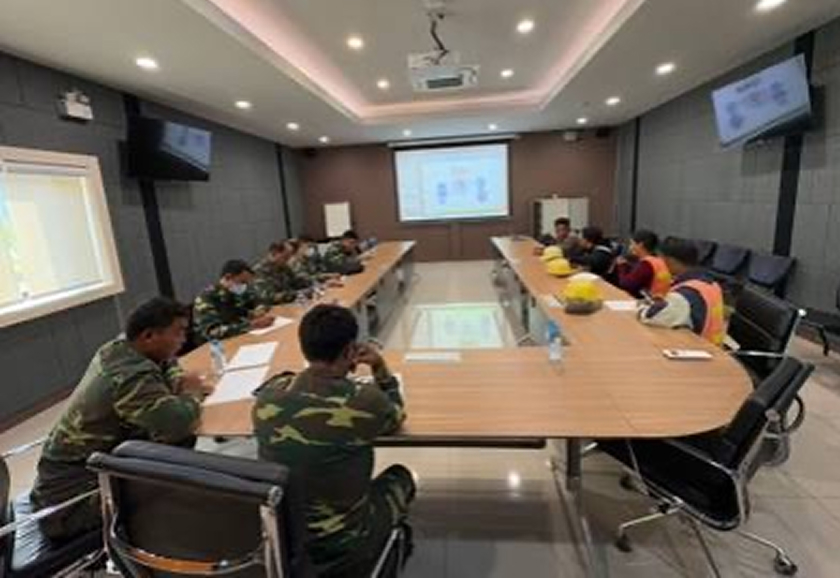
| Project/Activity | Participants | Description | Target | Outcome |
|---|---|---|---|---|
| Safety Training for Contractors Working Within Xayaburi Hydroelectric Power Plant | 856 | Communicate the Company’s OHS Policy, including site safety rules, internal traffic regulations and speed limits, waste segregation practices, emergency response procedures, and prohibited activities within the power plant premises to enhance safety awareness and support efficient operations. | 100% of contractors working in the power plant receive safety training. | 100% of contractors working in the power plant received safety training. |
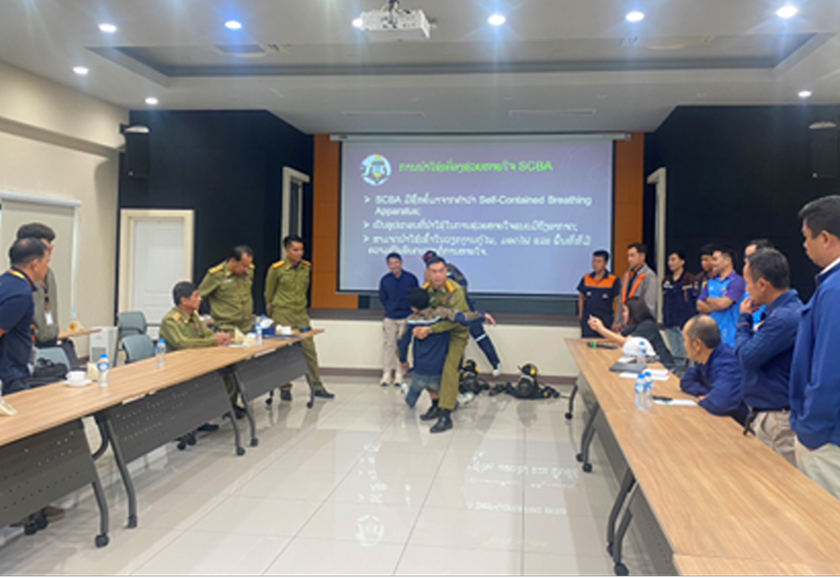
| Project/Activity | Participants | Description | Target | Outcome |
|---|---|---|---|---|
| Safety week | 209 | The training covered:
|
100% of participants gain knowledge and ability to respond effectively in emergency situations. | 100% of participants received training and demonstrated the ability to respond in accordance with the Emergency Action Plan |
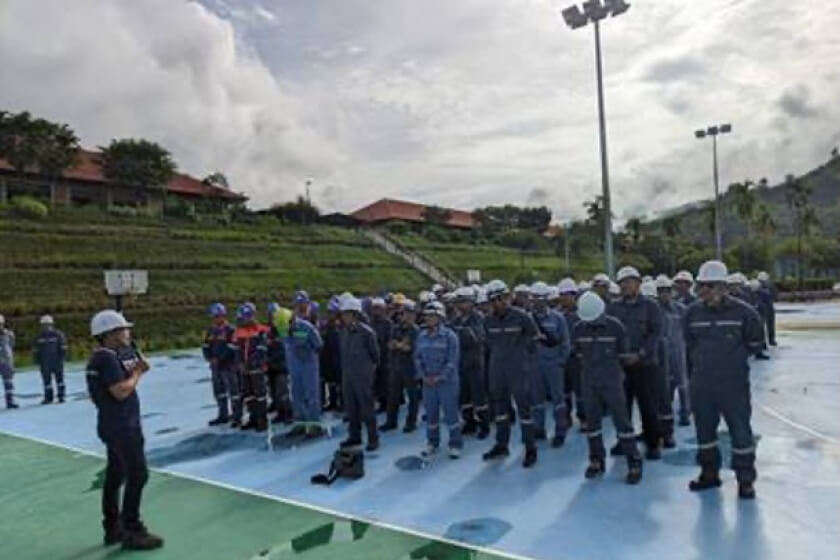
| Project/Activity | Participants | Description | Target | Outcome |
|---|---|---|---|---|
| Safety Toolbox Talk by Xayaburi Hydroelectric Power Plant Operators: Safety Precautions Before Outage Work | 312 | Conduct pre-outage risk assessments to identify potential hazards, including electrical work, confined space entry, working at height, and falling objects, while reinforcing safe work practices and verifying proper PPE compliance prior to task commencement. | 100% of outage personnel were briefed and formally acknowledged safety requirements before work begins | 100% of outage personnel received comprehensive safety briefings |
Emergency Preparedness & Response Program
| Project/Activity | Participants | Description | Target | Outcome |
|---|---|---|---|---|
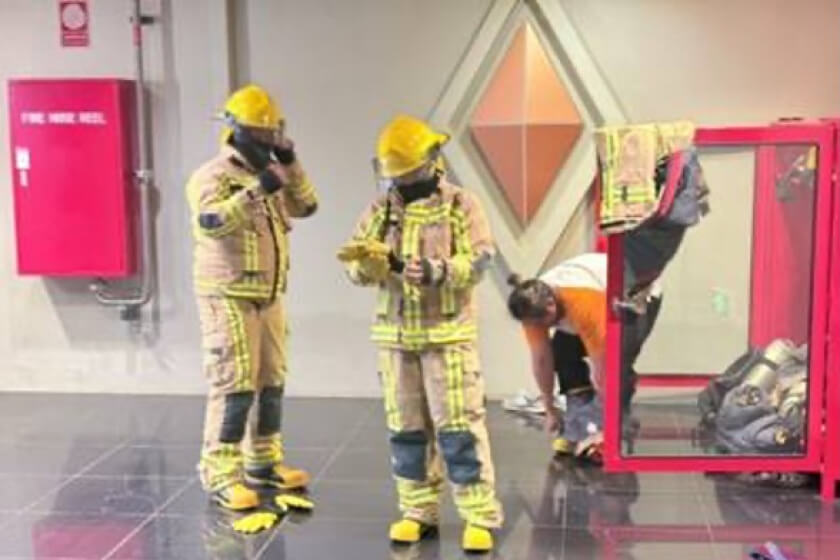
| Emergency Response Training with the Emergency Response Team (ERT) | 20 | Conduct coordination and communication drills to enhance teamwork and joint operational response, including engagement with relevant authorities. | 100% of Emergency Response Team (ERT) members participated and demonstrated correct response procedures | 100% of ERT members completed practical training and successfully passed the emergency response drill |
| Project/Activity | Participants | Description | Target | Outcome |
|---|---|---|---|---|
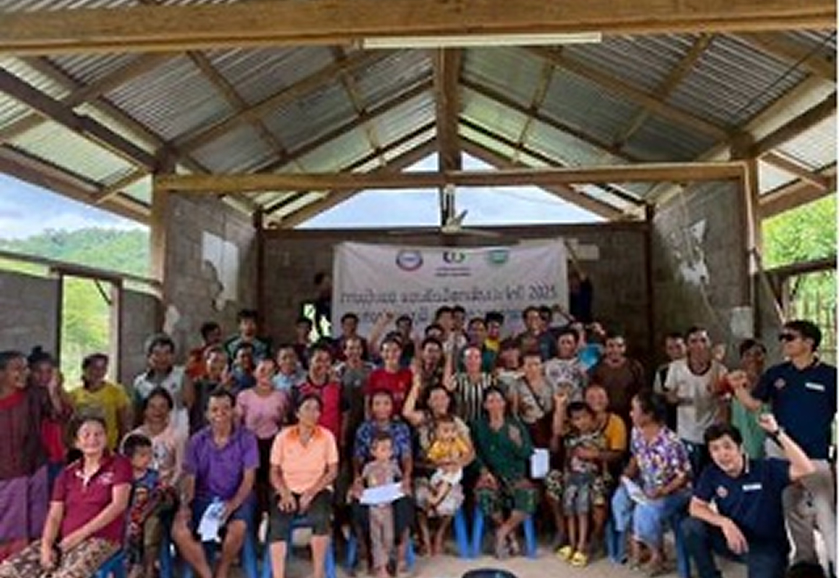
| High Water Flow Emergency Action Plan Communication Program | 42 | Communicate the High Water Emergency Action Plan to local government agencies and upstream and downstream communities surrounding the power plant | Relevant communities and authorities acknowledged and understood the Emergency Action Plan | All communications were carried out in accordance with the plan, with no complaints reported |
Road & Work Safety Program
| Project/Activity | Participants | Description | Target | Outcome |
|---|---|---|---|---|
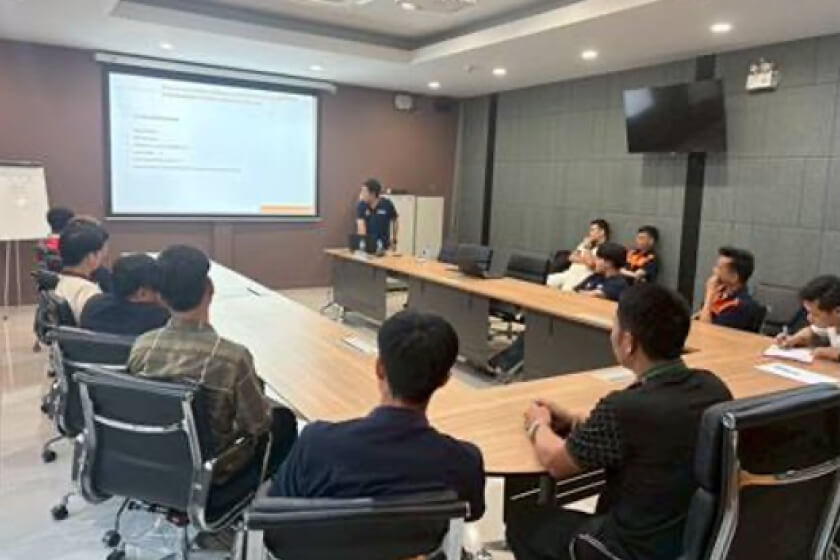
| Safe Driving Training and Road Safety Awareness Campaign | 100% of Xayaburi drivers participated | Deliver safe driving training and communication sessions to raise awareness and reduce road accidents. | 100% of drivers understand and comply with safety regulations | 100% of drivers completed the training and acknowledged the safety regulations |
| Project/Activity | Participants | Description | Target | Outcome |
|---|---|---|---|---|
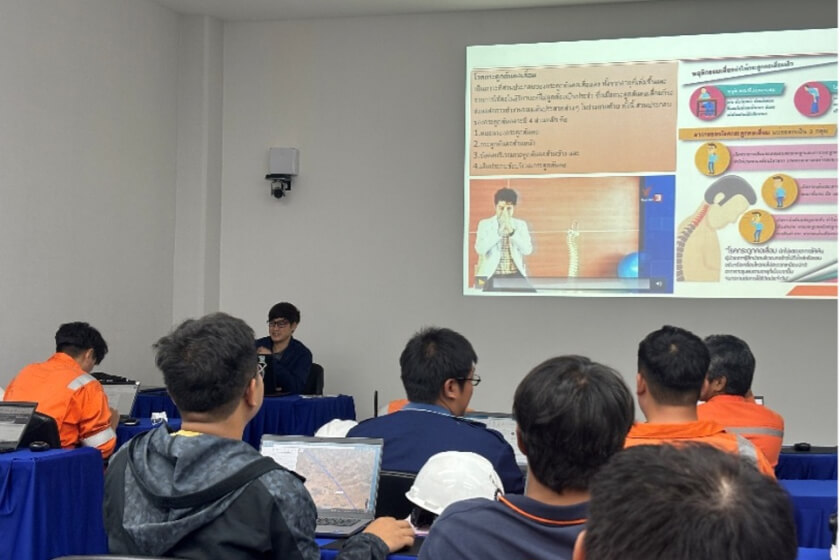
| Safety Talk (Every Wednesday) | 100% of operators working on the day of the event participated | Promote safety and environmental awareness both at work and outside the workplace, encouraging active employee participation and rotating facilitators to foster shared learning and engagement. | Strengthen a proactive safety culture across the organization | Zero work-related fatalities were recorded |
Occupational Health, Wellness, and Community Promotion Program
| Project/Activity | Participants | Description | Target | Outcome |
|---|---|---|---|---|
| Employee Health and Occupational Health Promotion | 36 | Promote physical exercise and overall health and well-being among employees. | ≥80% of participants exercise at least once weekly | 25% of employees exercised regularly and 99% engaged in some form of physical activity. |
| Project/Activity | Participants | Description | Target | Outcome |
|---|---|---|---|---|
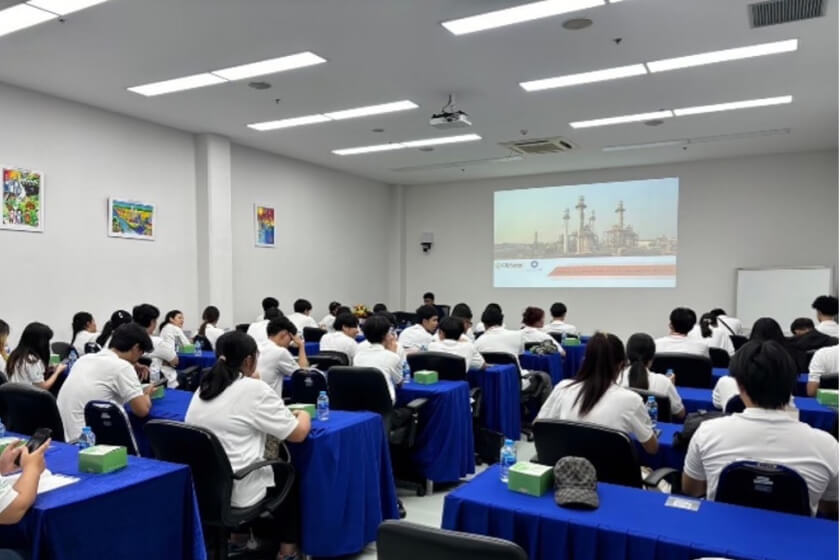
| Power Plant Open House | 150 | Welcome community members and students for site visits, providing knowledge on power generation processes, safety practices, and environmental management. | Promote understanding and strengthen stakeholder confidence | No safety or environmental complaints were reported. |
Sustainability report 2025