System Reliability and Availability



Impact on Business (GRI3-3)
Challenges and Opportunities (GRI3-3)
Reliable and sustainable renewable energy generation is a key factor supporting CKPower’s growth, amid the increasing demand for clean energy and fast-paced technological advancements, intensifying competition in the industry. These factors make the ability to maintain system reliability and availability essential for building market confidence.
In response, CKPower emphasizes continuous system improvement, innovation management, and the adoption of advanced technologies in its operations. At the same time, the Company strategically expands its renewable energy portfolio in Thailand and across the ASEAN region, focusing on renewable energy projects that minimize environmental impacts, optimize resource efficiency, and support the global energy transition. These initiatives contribute to energy security, reduce risks arising from operational volatility, and enhance CKPower’s long-term competitiveness.
Commitment (GRI3-3)
CKPower is committed to ensuring the reliability and availability of its power generation systems to address challenges related to energy system stability and fluctuations arising from the transition to renewable energy. CKPower has established clear operational protocols, optimized power transmission systems, and implemented customized preventive maintenance plans for each power plant to reduce system disruption risks and continuously improve system reliability.
Additionally, the Company continuously strengthens the expertise of its personnel through specialized training and expertise development to enhance expertise in technology, operations, and business development. These efforts aim to strengthen risk management capabilities and improve operational efficiency, while conducting business with environmental responsibility. The Company is committed to reducing pollution and optimizing resource efficiency to support sustainable development goals and its long-term commitment to creating value for stakeholders.
Operational Guidelines (GRI3-3)
CKPower upholds the stability and reliability of its power production and distribution systems through the following initiatives:
Investment in advanced technologies
CKPower invests in cutting-edge power plant technologies to ensure efficient, uninterrupted power distribution while minimizing environmental impact.Prudent cost management
Cost management is implemented across all processes, supporting sustainable development in all dimensions.People capability enhancement
CKPower organizes engineering and resource management training for personnel at all levels. Employees are encouraged to enhance operational systems and drive innovation for greater efficiency.Preventive maintenance
CKPower systematically plans annual maintenance and ensures the availability of backup equipment and critical spare parts to support efficient maintenance operations.Compliance with International Standards: ISO 9001:2015
All operational processes are aligned with ISO 9001:2015 and other quality management systems to ensure reliability and efficiency in power production and distribution2025 Performance
Total Installed Capacity
3,640
MW
3,402
MW
Total Energy Generated
12.28
million MWh
Avoided GHG Emissions
5.34
million tCO2e/year
Clean Electricity Generation
Clean Electricity
Actions Across All Production Dimensions
Annual Energy Production and Distribution Planning |
Regular System Audits and Compliance with International Standards |
|---|---|
|
Systematic planning considering customer demands and efficient resource utilization to optimize efficiency and reliability. |
Scheduled system audits are performed by experts in accordance with international standards to uphold quality and safety. |
Power Plant Performance Monitoring and Evaluation |
Proactive Preventive Maintenance for Long-Term Reliability |
|
Operational analysis is conducted to assess efficiency and identify areas for system improvements to ensure sustainability. |
Regular maintenance plans are established to reduce system disruption risks and extend equipment lifespan. |
Electricity Transmission System Enhancements |
Employee Development and Knowledge Sharing |
|
Advanced technologies and innovations are integrated to improve transmission efficiency, minimize energy loss, and accommodate rising energy demands |
A culture of continuous learning and sustainability excellence is cultivated through training programs and knowledge-sharing initiatives. |
Crisis Management
CKPower prioritizes systematic and effective crisis management, focusing on preventing and mitigating potential impacts on operations, business resilience the continuity of electricity generation and distribution systems, as well as the confidence of customers and stakeholders.
CKPower has formally established and implemented a Business Continuity Management (BCM) policy to ensure that all power plants maintain stable operations, adaptability, and the ability to sustain business continuity effectively under emergency situations.
Crisis Management Guidelines
- Develop emergency response manuals aligned with material risks to business operations.
CKPower The Company has developed an emergency response manual covering both natural disasters and critical scenarios, including fires, floods, climate change risks, chemical spills, earthquakes, and landslides, as well as potential power plant safety issues, to enable prompt and effective response to emergencies.
- Conduct regular emergency response training and drills
The Company conducts annual emergency response training and drills to enhance personnel readiness at all levels in dealing with unexpected incidents, as well as to strengthen effective decision-making and communication during crisis situations.
- Proactive risk assessment and the development of mitigation plans.
The Company conducts annual climate risk analysis and develops proactive mitigation measures to address potential risks.
- Infrastructure improvements for crisis preparedness
The company has enhanced the utility systems of its power plants to ensure efficient operations even during flood conditions by installing monitoring equipment, early warning systems, and real-time monitoring systems to support continuous surveillance, timely decision-making, and effective response to emergency situations.
- Proactive safety management and continuous monitoring.
CKPower’s engineers and safety experts continuously monitor and maintain safety systems, ensuring the stability and security of operations, even during a crisis, and continuously maintains the readiness and reliability of its power generation systems.
These comprehensive crisis management measures reduce operational risks and enhance business continuity and resilience, reinforce long-term confidence in the company’s energy generation and distribution systems, and elevate the standards of stability and reliability of CKPower’s leadership in sustainable and continuous system development.
Crisis Management
CKPower prioritizes systematic crisis management and has developed a comprehensive emergency response plan, structured into the following five key steps:


- Mitigation
- Establishment of an Emergency Response Team (ERT) : A dedicated team is appointed to manage emergency situations.
- Risk assessment and severity analysis to categorize potential emergencies and prioritize response procedures.
- Development of an Emergency Action Plan (EAP): Response protocols are devised for each severity level, including implementation methods
- Preparedness: To ensure effective plan implementation, CKPower implements the following measures:
- Plan preparation, review and approval
- Regular simulation drills to ensure confidence
- Response: During emergencies, the Emergency Response Team operates according to pre-established protocols with clearly defined roles:
- Director: Oversees management and command.
- Response team: Controls the situation and executes emergency operations.
- Communication controller: Manages internal and external communications.
- Support teams : Comprise evacuation leaders, first aid responders, and relocation teams.
- Recovery: Once the emergency has been resolved, CKPower implements recovery measures to restore normal operations:
- Restoration of Affected Assets and Systems: The company ensures the rapid recovery of infrastructure and operational capabilities.
- Prevention: To minimize future emergency incidents, CKPower proactively enforces the following:
- Regular Inspections: Emergency equipment, including tools and communication systems, is inspected to maintain readiness.
- Assignment of Responsibility: Designated personnel are responsible for ensuring the operational readiness of emergency response equipment and systems.
This proactive crisis management framework ensures operational resilience, safety, and reliability, reinforcing CKPower’s commitment to business continuity and risk mitigation.
Long-term targets, 2025 targets, and 2025 achievements (GRI3-3, EU1, EU2, EU28, EU30)
| System Reliability and Availability | |||
|---|---|---|---|
System Reliability and Availability |
|||
| Long-term Targets | |||
| Total renewable energy generated |
8.8
|
||
| Average plant availability factor |
>90% |
||
| Numbers of unplanned power outage |
≥2
|
||
| 2025 Targets | 2025 Achievements | ||
| Total renewable energy generated |
>8.0
|
10.7
|
|
| Average plant availability factor |
>90.0% |
88.12% |
|
| Numbers of unplanned power outage |
≥2
|
20
|
|
|
Remark * In 2025, the Xayaburi Hydroelectric Power Plant experienced two incidents of unplanned power outages, three incidents at Bangpa-In Cogeneration Power Plant, and fifteen incidents at Bangkhenchai Power Plant. |
|||
| SDGs |    |
||
Preventive measures to strengthen system reliability and availability
In 2025, all power plants established and implemented preventive measures to enhance the stability of electricity generation systems and reduce the risk of operational disruptions. These measures focus on improving work processes, strengthening system reliability, managing technical risks, and systematically enhancing personnel readiness to support operational continuity, as follows:
- Revision of work permit procedures
CKPower strengthened and aligned work permit procedures with the specific requirements of each task. Comprehensive pre-job planning meetings are required prior to starting work, involving operations personnel, maintenance teams, and safety officers. This approach ensures proactive risk management and minimizes potential impacts on the continuity of electricity generation systems during maintenance activities.
- Prevention of unplanned plant trip incidents
CKPower implemented additional preventive measures to reduce the risk of sudden plant trip incidents. These measures include revising Lock Out Tag Out procedures, enhancing the clarity and modernization of equipment signaling systems, and improving communication and coordination between emergency response teams and operations control teams. These actions aim to enhance the reliability and stability of the power system.
- Systematic implementation of preventive maintenance plans
All power plants developed and implemented systematic preventive maintenance plans on a regular basis, considering the actual operating conditions of equipment at each facility. These plans aim to reduce the risk of equipment failure, improve operational stability, extend asset lifespan, and ensure advance procurement planning of maintenance equipment to support uninterrupted operations.
- Development of real-time monitoring systems for solar power plants
Solar power plants enhanced their Real-time Monitoring Systems to continuously monitor operational status, production performance, and abnormal equipment signals. This enables timely detection and resolution of issues, reduces the likelihood of major system failures, and strengthens energy system resilience and continuity.
- Human capital development and emergency preparedness
All power plants conduct regular operational meetings and training programs to enhance employees’ knowledge, understanding, and preparedness in preventing and responding to situations that may affect energy stability and security, including emergency events and system disruptions. These efforts improve response effectiveness and minimize overall operational impacts.
Key Highlight activities at each power plant in 2025
Xayaburi Hydroelectric Power Plant
The Xayaburi Hydroelectric Power Plant actively monitors climate conditions and rigorously assesses risks that may impact its operations, aiming to strengthen resilience and ensure the continuity of electricity generation. Key actions undertaken include the following:
- Monitoring and response planning: The power plant formulated action plans and closely monitored the situation using the SCADA (Supervisory Control and Data Acquisition) system, which enabled real-time data collection and operational status monitoring for continuous and efficient power generation.
- Performance assessment and monitoring through key indicators: Plant operations were continuously tracked and assessed based on two key indicators: plant performance ratio for performance measurement and annual maintenance performance for equipment availability and capability monitoring.
- Implementation of the CKP forecasting system to enhance water management stability: The power plant utilizes the CKP Forecasting System, developed in collaboration with DHI A/S (Denmark), to enhance water management and support electricity generation planning. The system integrates meteorological and hydrological forecasts with real-time data and advanced modeling to accurately predict water inflows. It can simulate upstream and downstream water flow scenarios, enabling effective water trend forecasting, optimizing energy production planning, and ensuring environmental protection and community safety under all conditions.
- High flow emergency response and community support : During July and August 2025, the power plant implemented preparedness measures to address High Flow Emergency situations resulting from heavy rainfall caused by Typhoons Wipha and Kajiki. The CKP Forecasting System was utilized to accurately analyze and forecast water inflows, as well as to plan coordinated water releases from upstream dams that could affect water levels in areas surrounding the power plant.
The power plant provided support to surrounding communities in accordance with its emergency response plan, as follows:
- Provided training and information on the Emergency Response Plan.
- Systematic and timely water level alerts: Issued advance notifications to local communities regarding rising water levels through effective communication systems to ensure timely and broad outreach.
- Evacuation Management and Resource Support for At-Risk Communities: Implemented systematic evacuation procedures and the relocation of belongings from high-risk areas, while providing boats and manpower to assist communities potentially affected by the situation.
With well-prepared plans and operational readiness, the power plant is able to resume electricity generation promptly, minimizing impacts on communities and the environment, while reinforcing confidence in the Company’s effective emergency management capabilities.
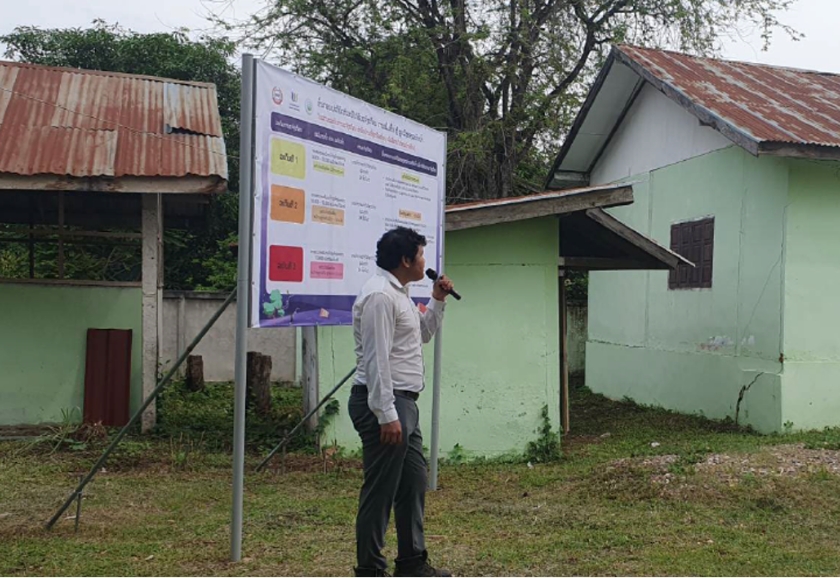
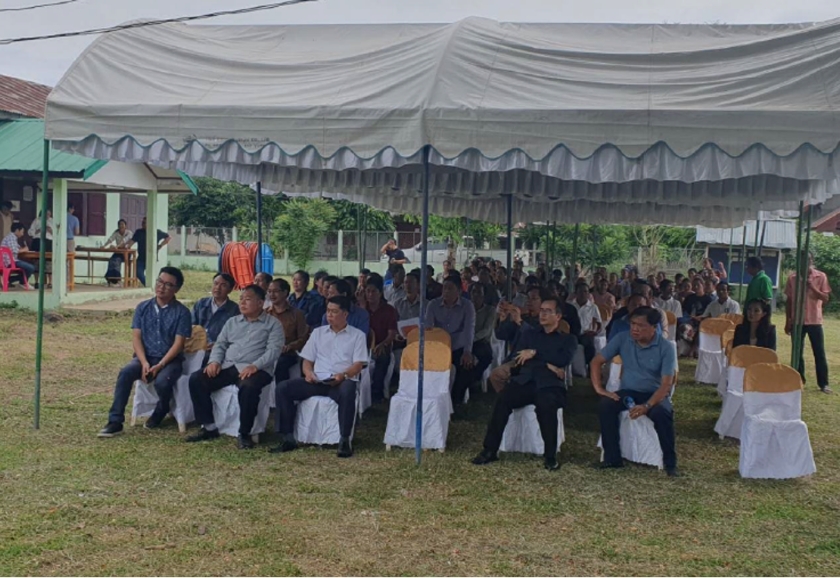
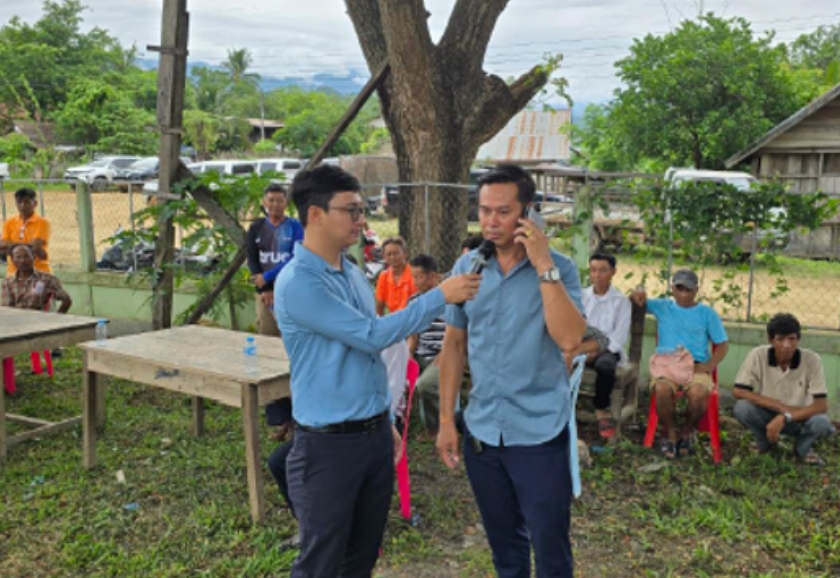
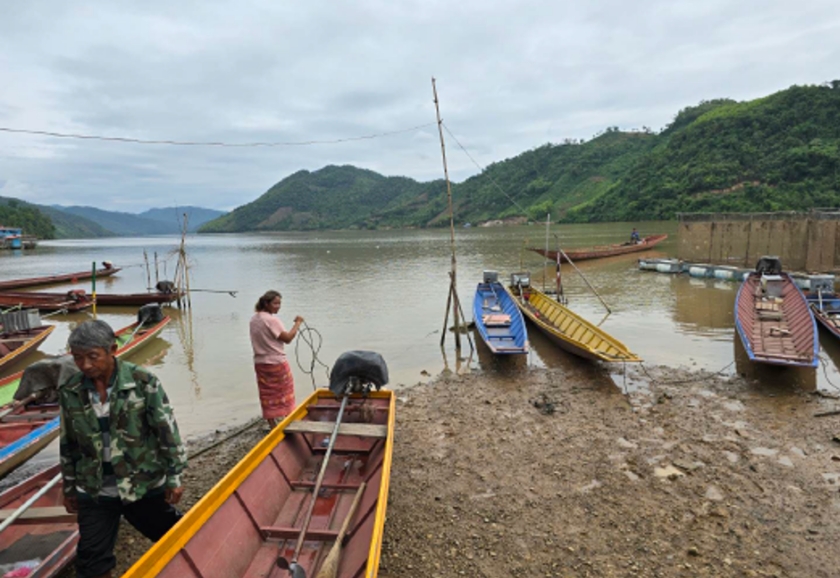
- Annual testing: The Xayaburi Hydroelectric Power Plant conducted annual testing under the Power Purchase Agreement (PPA) and Contracted Operating Characteristics (COC) requirements during November 2-6, 2025. The rigorous testing covered all critical aspects specified in the PPA and was successfully completed within the planned timeframe, reinforcing the plant’s commitment to maintaining operational standards and power generation reliability.
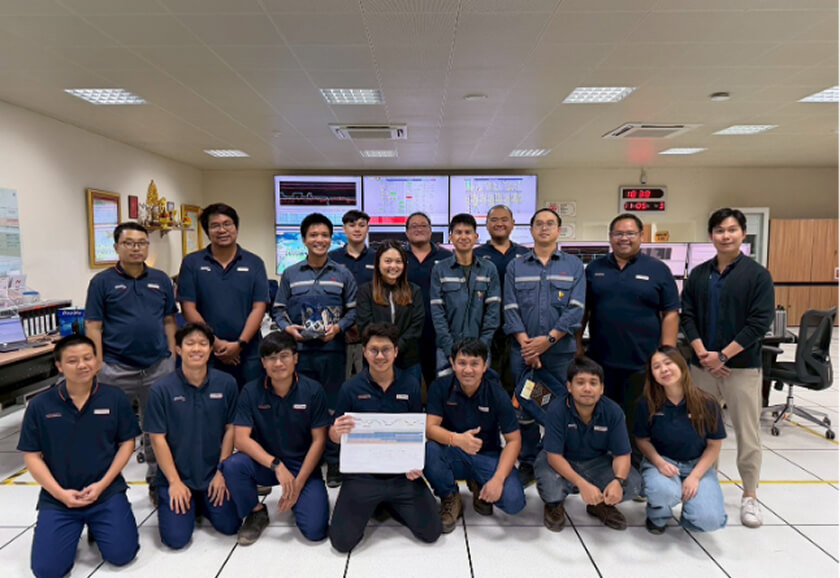
Annual Test Activities during 2-6 November 2025 at Xayaburi Hydroelectric Power Plant
Nam Ngum 2 Hydroelectric Power Plant
The Nam Ngum 2 Hydroelectric Power Plant implemented comprehensive water management strategies to ensure uninterrupted and reliable electricity generation, fulfilling the Company’s contractual commitments while minimizing environmental impact. Key actions taken are as follows.
- Seasonal water management
- Dry season: Water levels were maintained above designated thresholds to support continuous power generation and ensure operational stability.
- Rainy season: Proactive floodgate management measures were implemented to prevent unnecessary releases, minimizing potential impacts on local communities and the environment.
- Major overhauls
The power plant carried out a major overhaul of Unit 2 from 16 November 2025 to 30 December 2025 to maintain the performance of machinery and equipment in line with operational targets. This initiative strengthened system stability, reliability, and operational readiness, ensuring continuous electricity generation and supporting long-term sustainable business operations.
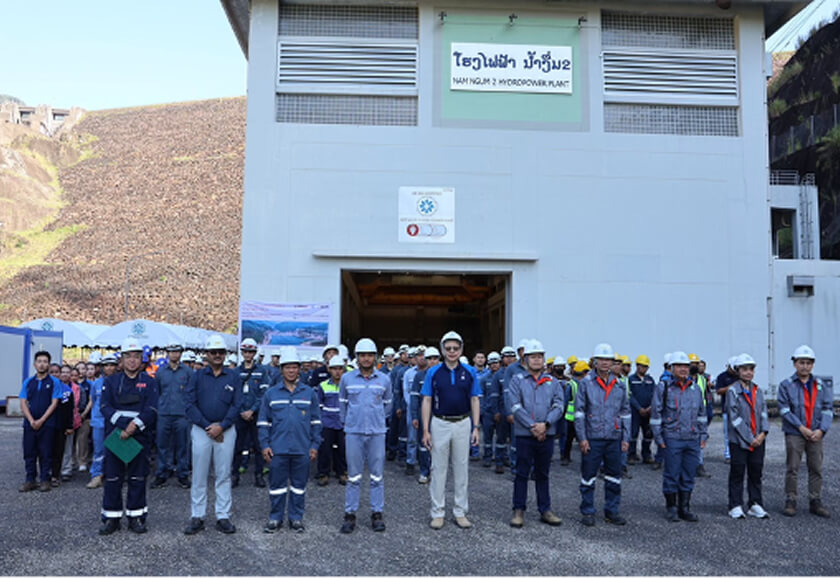
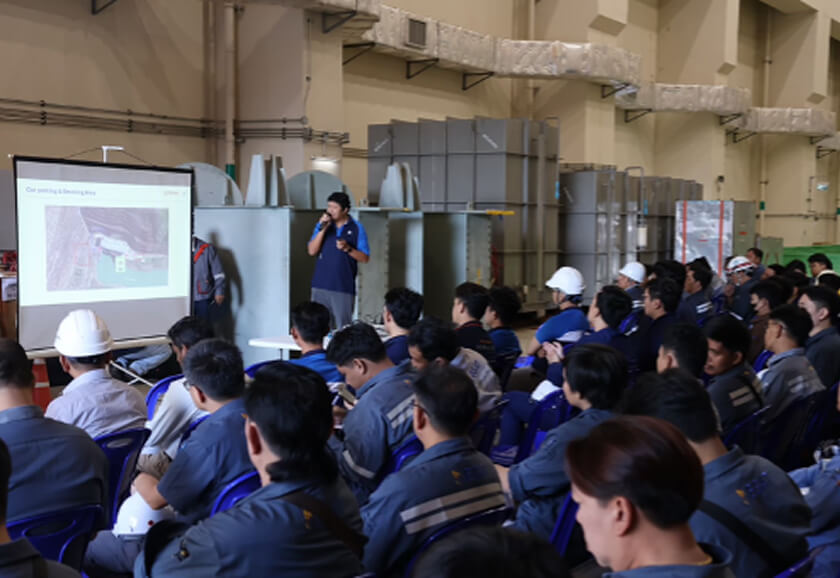
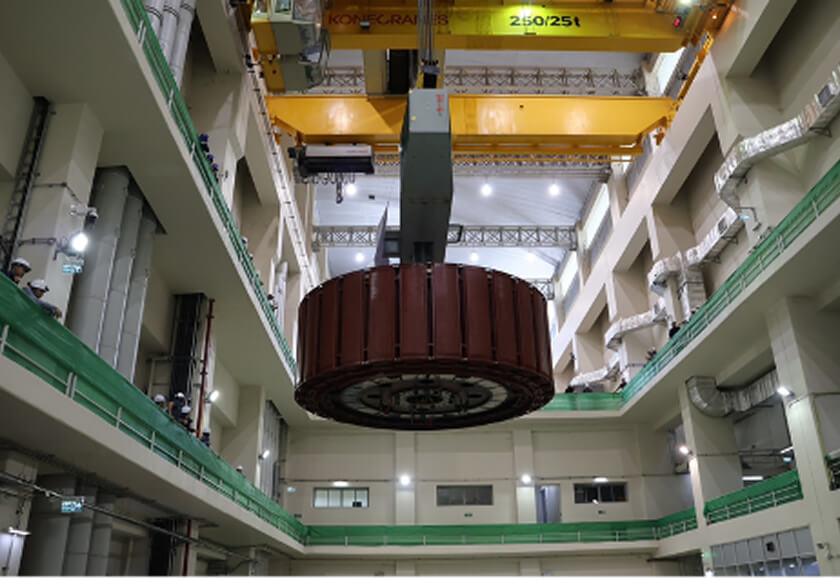
Major Overhaul activities at Unit 2 of Nam Ngum 2 Hydroelectric Power Plant
Bangpa-in Cogeneration Power Plant
Bangpa-in Cogeneration Power Plant collaborated with the Provincial Electricity Authority (PEA) to upgrade the power transmission system within the industrial estate into a closed-loop system to strengthen the stability, resilience, and continuity of electricity supply, as detailed below:
- The power plant can transmit electricity through two power stations, enhancing operational flexibility and ensuring continuous power transmission, even when one station undergoes maintenance or experiences malfunctions.
- This collaboration reflects the power plant’s commitment to supporting energy security and the reliability of electrical infrastructure within the industrial estate, ensuring the continuity of industrial operations.
- Bangpa-In Cogeneration Power Plant Project 2 conducted a Minor Overhaul from 20–29 July 2025, which was completed as scheduled. This activity helped maintain the efficiency of the power generation system and strengthened operational readiness for continuous operations.
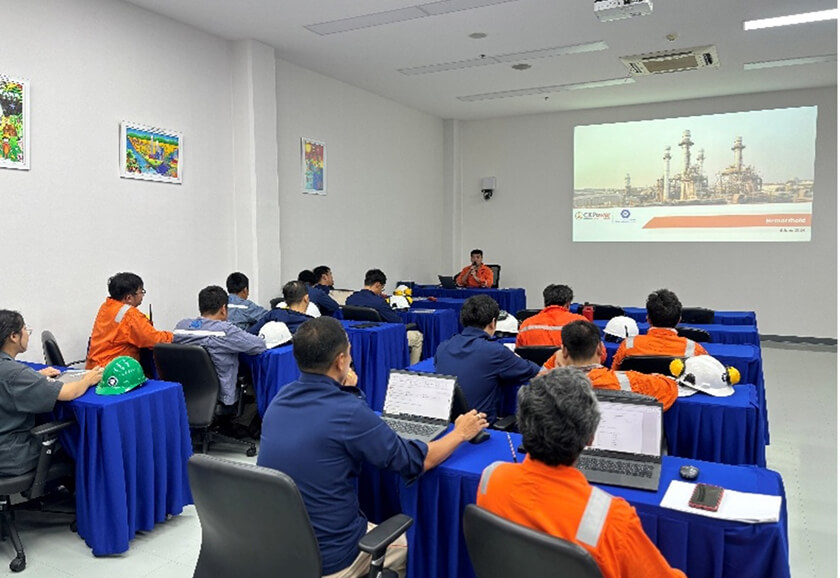
Minor Overhaul activities at Bangpa-In Cogeneration Power Plant.
Bangkhenchai Solar Power Plant
The Bangkhenchai Solar Power Plant conducts continuous performance assessments and monitoring to enhance the reliability, efficiency, and stability of its electricity generation processes. Key performance indicators (KPIs) and operational monitoring systems are established to support operational decision-making and ensure business continuity, as follows:
- Key indicators
- Plant performance ratio: Measures power generation efficiency and compares operational performance against system capacity to reflect the overall performance of the electricity generation process.
- Annual maintenance performance: Evaluates equipment reliability and system availability in order to support maintenance planning and enhance overall system reliability.
- Performance monitoring
- The production team of the power plant conducts monthly performance evaluations to analyze factors affecting efficiency and implement necessary corrective measures on a continuous basis.
- Real-time Monitoring System enables continuous tracking of operations and equipment performance, allowing timely issue resolution, reducing major failures, and strengthening system reliability and continuity.
- The primary goal of Bangkhenchai Solar Power Plant is to enhance the reliability and sustainability of its power generation through efficient operations and strong environmental responsibility.
2025 Performance (EU1, EU2, EU29)
In 2025, CKPower implemented initiatives to enhance efficiency and prevent losses in production, including machinery optimization, energy consumption reduction, and reduction of production losses:
| 2025 Performance | ||||
|---|---|---|---|---|
| Annual Maintenance | ||||
| Xayaburi Hydroelectric Power Plant | Nam Ngum 2 Hydroelectric Power Plant* | Bangkhenchai Solar Power Plant | Bangpa-in Cogeneration Power Plant ** | |
| Targets of the total maintenance |
100% |
100% |
100% |
100% |
| Achievements Completed of the total maintained items |
100% |
100% |
100% |
100% |
| Execution of annual production and distribution plans |
As outlined |
As outlined |
As outlined |
As outlined |
| Performance Ratio |
As outlined |
As outlined |
As outlined |
As outlined |
* Nam Ngum 2 Hydroelectric Power Plant carried out a Major Overhaul of Unit 2 as planned for 2025, with the maintenance period from 16 November 2025 to 30 December 2025.
** Bangpa-In Cogeneration Power Plant Project 2 conducted a Minor Overhaul during 20–29 July 2025.
| Hydropower | Solar Power | Cogeneration (Electricity) | Cogeneration (Steam) | |
|---|---|---|---|---|
| Install Capacities |
3,360
|
42
|
237.5
|
40
|
| Total energy generated |
10,653,525
|
20,983
|
1,489,135
|
46,088
|
| 2025 Performance | ||||
|---|---|---|---|---|
| Customer Satisfaction Survey | ||||
| Xayaburi Hydroelectric Power Plant | Nam Ngum 2 Hydroelectric Power Plant | Bangkhenchai Solar Power Plant | Bangpa-in Cogeneration Power Plant | |
| Percentage of customers satisfaction surveys in 2025 |
100% |
100% |
100% |
100% |
| Satisfaction rate in 2025 |
99.00% |
99.05% |
92.50% |
99.17% |
| System Everage Interruption Duration Index | ||||
| Xayaburi Hydroelectric Power Plant | Nam Ngum 2 Hydroelectric Power Plant | Bangkhenchai Solar Power Plant | Bangpa-in Cogeneration Power Plant | |
|---|---|---|---|---|
| SAIFI |
1.00 |
0 |
3.00 |
0.23 |
| SAIDI |
0.84 |
0 |
104.85 |
1.68 |
| CAIDI |
50.20 |
0 |
6,290.98 |
1,497.73 |
Sustainability report 2025